
Osborne Pike

Shelf Life

16th February 2012
Brand Stories From Worldwide Supermarkets

An Arabian adventure

Posted 16 February 2012

Welcome to the new edition of Shelf Life, with more ‘stories that sell’ from the supermarket.

It’s always exciting to explore the shelves of a country that I’ve never visited before, because it gives me the chance to be surprised by the exotic and the familiar in equal measure. Saudi Arabia didn’t disappoint, with some categories totally new to me (ghee, alcohol-free fruit beer), some very recognisable but not previously seen on that scale (tissues, milk drinks, rice), and of course the fun of seeing familiar brands with their logos written in a strange letterform that doesn’t have an upper case.

Well stocked

Posted 16 February 2012
wall

Despite first impressions this store doesn’t only cater to seven-foot tall customers, but has an innovative approach to merchandising with an extra couple of shelves and a full-length display card on top of those.

Apparently it’s easier to restock from the shelves above than shuffling stock around on trolleys. The top two rows also provide a neat and impactful display that customers can’t mess up by trying to buy stuff. Unless they’re basketball players.

Takeout: Always interesting to find a supermarket layout that creates a different shopping experience. Albert Heijn’s chillers are another case in point.

Think your box is big?

Posted 16 February 2012
chips

Just when I thought big boxes of cereals or detergent were the most standout items in the store, I was hit between the eyes by this re-interpretation of the chips multipack.

Containing only 14 small bags of 30g, these must take the prize for simultaneously selling the largest volume of both ink and air. I’m guessing that the cheap price of fuel makes the logistics of distribution completely different here, but you’ve still got to get them home. That’s where the SUV could come in handy.

Takeout: Literally stunning on shelf and highly attractive, but I can’t see them getting into my local Waitrose.

Yes, there is icing on the cake!

Posted 16 February 2012
betty

In the last blog I commented on the lost opportunity to capitalise on the trendiness of cupcakes by UK home-baking packaging. Cupcakes are also hot here in Saudi, but as you can see the retailers are getting a bit more behind the idea.

Not sure Betty’s packaging is quite living up to the full potential of the opportunity, due to a tight adherence to the design system, but I bet they’re selling a lot of cake mix.

Takeout: Same as before: telling a story that’s already ‘out there’ and has a great visual language could help agile brands to stand out. Go on Betty, do a multi-coloured variant…

Works both ways

Posted 16 February 2012
Milk

Part of my challenge during this visit has been to work out how to design a logo in arabic lettering to match the emotional meaning of the ‘English’ one we will be creating.

Most major brands seem to manage this reasonably well, normally using a two-sided pack with one language on each side.

But some very clever thinking has gone into the design of this logo for leading dairy brand Alsafi: the separate brand names manage to share a letter so that both read perfectly comfortably, all integrated in a friendly and dynamic roundel.

Takeout: Watch this space for what we come up with. Unfortunately this trick will only work for letters that happen to look reasonably similar (I think that means ‘s’), and are in the middle of the word (since as you all know Arabic text reads right to left).

Alcohol-free beer that rocks!

Posted 16 February 2012
Rockers

I suppose it’s obvious really, but until today it’s always puzzled me why no alcohol beer fails to look right, and doesn’t usually last very long in the market. No matter how hard designers try to make it look like the ‘real thing’, there’s always that 0% declaration threatening to spoil the party, like your Mum telling you to turn the music down at 11pm.

In this market all beer is no alcohol and most is fruit-flavoured, but that doesn’t stop the visual language being loud and proud. Next to a wide range of slightly incongruous fruity Holstens, two local brands stood out for their bold displays of vibrant self-confidence. Both take a leaf out of the Coke Zero book in choosing black as the brand colour, but after that they take a different tack in terms of pace and sophistication. Production values are top notch, and perhaps the biggest surprise came on the back of pack for Bario – it’s brewed by ‘International Refreshments Co.’, aka Pepsico.

Takeout: Stop apologising and focus on the emotional benefits of your brand as a full ‘player’ in the category. I think soya milk has got this message too and often looks better than ‘real’ milk.

Strong animal name game

Posted 16 February 2012
Power

The adoption of animal properties of speed, grace or strength (or all three together) has always been a feature of branding, and this idea certainly seems to work for Red Bull.

Most of its competitors seem happy to try to steal a bit of market share with very similar design language and a slightly different animal, and when the price is right, it does deliver sales.

Whilst I’m not target market I’d probably respond favourably to a more surprising story. Why not take inspiration from the unexpected prowess of the warriors in one of my favourite films – Kung Fu Panda? ‘Mantis’ has a certain ring to it, don’t you think?

Takeout: Not the first time I’ve commented on the energy drink market’s one-dimensionality. I salute the self-awareness behind concepts like ‘Pussy’, but we need more innovation here.

Grains of truth?

Posted 16 February 2012
Sacks

With well over 20 brands available in this store, Saudi rice consumers (penetration: close to 100%) are not short of choices.

Whilst these real sacks might stand out as incredibly natural and authentic on a European shelf, here they blur into one and feel quite cheap and generic.

More premium offers use elaborate print techniques to paint a picture of elegance, taste and (mainly Indian) tradition. Large size and clear separation of the rice grains is a recognised signal of quality, so photography tends to be something of an arms race: ‘my grains are bigger than your grains’.

Takeout: A truly mass (and massive) market with all kinds of packaging strategies on display: product superiority, meal appeal, authentic origin, as well as ‘just happy to be on the shelf’. Daawat’s design is tasteful enough to decorate a bedroom with, and ticks all my boxes.

Seal the deal

Posted 16 February 2012
Maggi

Remember when you could get this sort of off-shelf display in a European supermarket?

This kind of real estate can’t be cheap, but it certainly makes an impression for this innovation (there was also a 15 metre floor ad in front of the meat counter).

Even on the shelf the high gloss sachet seen through the  window of the outer box gives the strong impression that the chicken is already roasting in its bag in my oven – tasty stuff.

Takeout: It’s not trendy, but this simple and highly effective use of print technique and a window will be ensuring it’s chicken tonight…

Need to freshen up?

Posted 16 February 2012
KleenexBland

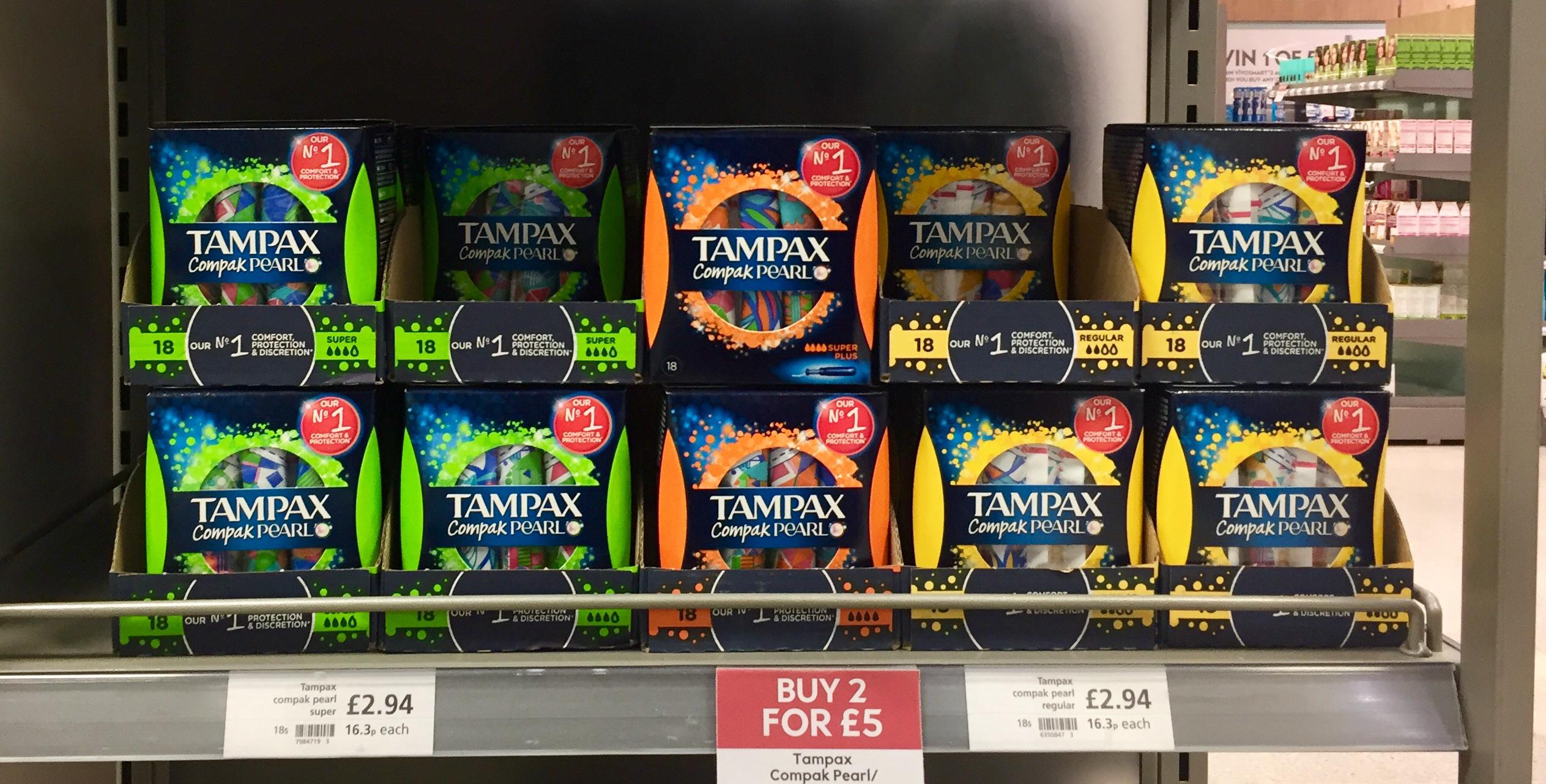
I was struck during my visit by the fact that tissue boxes are literally everywhere – in every car, on every table. Given this fact I was somewhat disappointed by the display qualities of the designs on shelf – seemingly accepting a commodity status rather then seeking to add value and innovation. Surely this is a market where Kleenex’s award-winning fruity packs would make a splash?

Takeout: Catering for all tastes as long as they’re conservative, I’d wager the consumer is ready for something a bit more adventurous.

Carafe happy

Posted 16 February 2012
Carafe

In a juice market this big it must have given someone at Almarai a great deal of pleasure to shoot from minor player to dominant brand leader, helped by the adoption of a plastic carafe format.

So now everyone’s got one, and given the striking similarity between all the brand logos and fruit photos, it’s down to packaging shape to help spot the difference.

Takeout: A tough call but despite better graphics the challenger here falls down on physical storytelling. It feels good in the hand, but I’d still prefer a carafe to an anvil on the table.

Shelf Life

27 January 2012
Brand Stories From Worldwide Supermarkets

Making a good impression

Posted 27 January 2012

Welcome to Shelf Life, which in this edition offers observations on the many faces of authenticity, the metaphorical power of format, materials and type, and the sorrows and pleasures of being a man standing in front of a shelf made just for him.

Put your pound coin in the trolley and follow me…

Nice paint job

Posted 27 January 2012
dulux

It must be nice to have an aisle all to yourself in store, and to be able to dictate the optimum shelf layout to allow consumers to find the right product. The new Dulux range design seizes this opportunity with great panache, offering a calm wall of exquisitely-coded packaging.

The core colour range balances the brand iconography with clear communication of paint type, purpose and colour, the last being cleverly grouped to share backgrounds for related colours, creating easy to shop clusters.

Specialist sub-brands are laid out differently, using the all important space ‘above the handle’ to focus attention on the promise and reason to believe for each range. All in all a true brand-leading performance.

Takeout: When you’ve got your own space the rules change and it’s not about shouting an emotional “pick me!” from a crowd of eager competitors. It’s about truly considering buyers’ needs and priorities.

Form follows function?

Posted 27 January 2012
DonSimonGem

Packaging format, heavily guided by form, influences our impression of what’s inside at a deep, if unconscious level. Packaging graphic design, whilst still a subtle communicator, is relatively more up-front in its storytelling.

Long-life juice is very much the poor relation of chilled juice in the UK market, and so brands try very hard to compensate with signals of freshness and quality. But should these signals be physical or graphic?

No harm in doing both, of course, but execution is vital. Don Simon strikes me as an honest, authentic brand, and has a charming story on the back about its factory being surrounded by ‘millions of orange groves’ (I think they mean trees). But the carton format used is one of many that try extremely hard to shape themselves to look like the gable-top which dominates the chilled juice category.

In practice most of these shapes look and feel like a bad day at the origami class, so for my money the Marks & Spencer standard ‘briks’ tell a far more convincing freshness story by not trying too hard.

Takeout: Physical packaging is a powerful communicator, but simplicity and functionality still trump a contrived attempt to look like something else.

Cut myself just looking…

Posted 27 January 2012
Mensrazors

Get them into a focus group and men are a pretty pragmatic bunch, who think all marketing should be like the Ronseal ad’s now famous strapline: “Does what it says on the tin”.

Well it’s a bit different in razorland, with few brands bold enough to break away from the arms race and just offer to ‘shave your face’. Gillette Fusion alone is available in at least 5 levels of trim, including Power Gamer and something called ‘Phenom’. Five blades is the new minimum for real men, so refilling is not for the faint-hearted, nor the short of cash. The product looks like it has more computing power than Apollo 13, and occasionally stands out from its 4-layered brand name and shiny foiled blister enough to become a differentiator.

Men often say that they hate shopping, buying things quickly and getting out. Good luck with that if you need some new blades.

Takeout: Male categories have a performance driven language all of their own, but ‘quietly assured’ could stand out from the pack.

The icing on the cake?

Posted 27 January 2012
GreensCakemixes

Ticking lots of relevant boxes as a nostalgic treat, a fun thing to do with your kids, or simply demonstrating yummy mummy good taste, not many food products are hotter than cupcakes right now. Over at the home-baking aisle you wouldn’t know it however, with no-one capitalising on the extra awareness (and rich imagery) that being in fashion provides for free.

Takeout: Telling a story that’s already ‘out there’ and has a great visual language could help agile brands to stand out.

Is beige the new black?

Posted 27 January 2012
BlackTower

Consumers are increasingly seeking the ‘authentic’ in many markets, driven by a combination of factors such as marketing skepticism and the widespread availability of what used to be called ‘niche’ brands. All-conquering social media channels and the radical transparency that goes with them only accelerates this trend, to the point where being a big, mass-market brand can seem rather last century.

This can lead to some fascinating design mind-games, such as these Tesco Finest wines, trying very hard to look as if design is the last thing on their mind. It’s all about the product, we wouldn’t waste effort and money on trying to persuade people to buy a nice label… but we’ll invest plenty trying to persuade people to buy an ugly one.

Moving down several price points, Black Tower sports one of the best-produced designs to be seen anywhere in the supermarket – half-sleeved, base-labelled, gold-foiled and sporting a fabulous image of an exotic holiday promotion. Yours for a fiver, and when you think about it, possibly more transparently authentic than the uber-dowdy wines three shelves higher up.

Takeout: Authenticity has developed a language of its own, but true authenticity is simply being and showing yourself.

So good they opened it twice.

Posted 27 January 2012
SanPellcans

The extra expense and packaging waste of this utterly redundant foil ‘lid‘ is completely unjustifiable in a rational world. Thankfully we don’t live in one of those, so instead it adds charm, ritual, value and personality.

Takeout: One of the best examples of ‘unreasonable care’ for a product. Drink one and notice how the sensation of a peelable layer makes you feel differently about the quality and taste.

Packaging goodness

Posted 27 January 2012
woodencrateCapri

Wood is a natural material that is made from trees. Fruit is a natural product that grows on trees. Aluminium is a natural material that is extracted from bauxite ore at very high temperatures. Skip the last bit and Capri-Sun is just giving you nature in a convenient form.

Ribena is all about the Vitamin C goodness of blackcurrant (never quite sure how to take its claim that it uses nearly the entire British crop). This multipack of cartons looks bold and sunny even when the shelf stackers have missed a bit, and I love the way the straw creates a sense of anticipation; even thirst.

Takeout: Two standout examples of telling a simple story well.

Typeface soup

Posted 27 January 2012
Typefacesoup1

I’ve always thought that the characteristics of soup (a mixture of lots of different vegetables, herbs, colours and textures) lend themselves perfectly to a mélange of typefaces. The impression of a placed paper label seals the deal, and gives oodles of standout.

Exactly the same idea as New Covent Garden, but even in this rather clunky plastic bucket, looking twice as fresh.

Takeout: If evidence was needed that type is a symbol and not mere text, here it is.

Illegibility, repetition and nonsense. All good

Posted 27 January 2012
Asasi Dry

There can hardly be a country whose beer isn’t available in British supermarkets, so choosing is a bit like asking: “where do I want to go this evening?”

When more than one beer from that country is available, you get to choose what ‘type’ of Brazilian/Spanish/Czech/etc beer drinker you want to be like, and packaging is your guide. No point going there if you don’t get an authentic (that word again) experience, so with Japan’s Asahi I’m glad to see just the right amount of weird symbols, and a long-winded story of taste, ingredients and ‘all seasons’ suitability (in which the words ‘Asahi’ and ‘beer’ appear 6 times each). Almost clashing shapes and typography reassure me that this label has gained its details by slow accretion, not through a design ‘concept’.

It all adds up to an exotic, urban chic that could easily be translated lock, stock and barrel into, say, a clothing store. We could call it… Superdry!

Takeout: Beer is a national (or regional) symbol that both borrows from and directs a country’s image. Think of it as a mini-tourist brochure.

Shelf Life

4 January 2012
Brand Stories From Worldwide Supermarkets

Lessons from the shelf

Posted 04 January 2012

Welcome to the first Shelf Life of 2012, with an innovative new feature – the takeout. This is not, as my Scottish friends might assume, a voucher for a Chinese takeaway, but a simple summary of the marketing point behind each post.

Of course when I say ‘point’ I really mean ‘point of view’, since these are only my thoughts, albeit infused with the experience of too many years to mention. Feel free to disagree or support them by leaving a comment.

The fact is that the supermarket shelf is a fantastic treasure trove of information, populated as it is by the fruits of some very clever (and some less clever) thinking, all competing to make the right story appear, in an instant, in the mind of the consumer.

I love this description of the place I call home from The Total Package: ‘the supermarket is as visually dense, if not as beautiful, as a Gothic cathedral, and as predatory as a tropical rainforest.’

Let’s go hunting…

In the bag

Posted 04 January 2012
Veuve Clicquot

Great to see Veuve back on top form after the fridge fiasco commented on in our November 2010 blog. Here we see a return to some fashion-based wit, with a tech-fabric cooling bag complete with faux leather handle and fastener, sporting the ‘VCP’ detail from the brand heraldry. Simply loving the sketched stitching and luggage tag, darling!

Takeout: Clever and relevant promotional packaging stimulates impulse purchase, even at this price.

What could it achieve for your brand?

Windows ‘R’ Us

Posted 04 January 2012
dorset

As I explained in a recent seminar, Dorset Cereals uncovered a hidden army of muesli fans when it created a brand new story through packaging, and tens of thousands of consumers sighed with relief: “at last, a muesli that understands me!”

I also showed the plethora of brands who suddenly felt the need to move their product into smaller, matt boxes with a window reveal. Few of these admirers opt for the subtle ‘cereal cosmetic’ story that I reckon dorset tells, however: Here in The Netherlands Albert Heijn’s private label goes for cartoon naiveté instead, charming but less valuable. A window on a bowlful of product is not ownable, as demonstrated by the Euroshopper plastic bag that comes in at a quarter the price of dorset.

Takeout: The lesson here is to understand that it’s the full story behind the design that is the consumer benefit, and not assume that the simple feature of a window on the product is the story.

Designz for Heinz

Posted 04 January 2012
heinz2

Working on a Heinz brief from the designer’s perspective is dominated by one question: How should I use the distinctive but sometimes overbearing tombstone (sorry, ‘keystone’) device? How much of it do I need to use to make it mean something? Better still, to make it mean the right thing? (Ok that’s 3 questions.)

No point checking the brand guidelines, the brand is way too diverse to have any meaningful do’s and don’ts. So when we want established, expert Heinz, we’ll have the whole thing please, complete with triple keyline to protect our secret recipes. And for the cute, cuddly side of the brand, let’s have a soft, round-cornered, vignetted partial version, set at a restful angle. Both work for me. The sticky-uppy horizon version looks a bit severe here on the previous ‘breakfast’ design, but I’ve seen it work a treat on cans.

Takeout: Highly diversified brands need flexible identity systems to function optimally in diverse categories. To do this whilst remaining true to the brand’s core identity is possible, despite the lack of literal consistency.

Glass and metal

Posted 04 January 2012
Grolsch

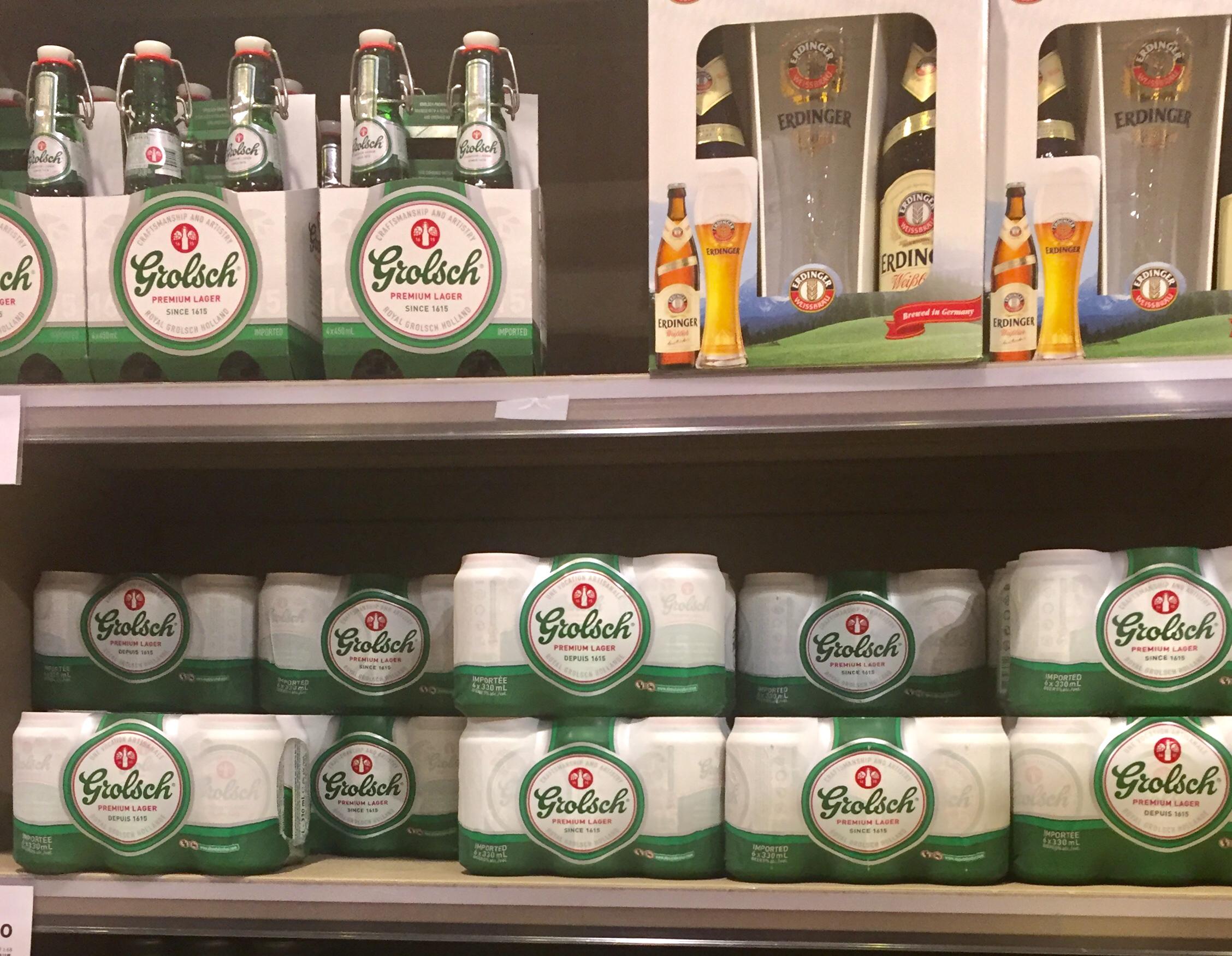
Those tried and trusted metaphors of crisp, clean taste (condensation and chrome) are present in spades on this new Grolsch pack from the Dutch market.

Both these packs also offer some structural innovations for ever more convenient storage and retrieval. ‘Fridge pack’ and ‘Mini Crate’ are fairly prosaic descriptions, but a ‘Cool meter’ on each can sounds like it might be worth talking about down the pub, a clever trick for a drink at home innovation.

The balance between this ‘new news’ and the branding is very different on these two executions, and for me (grey) synergy is just about beating (red) interruption, bearing in mind that when spending close to €10 we can assume some level of engagement.

Takeout: Promotional messages should be part of any brand’s identity system, not reinvented every time there’s a new offer.

The food shot…

Posted 04 January 2012
Maggi_puree

I’ve said this before but I’ll say it again. Big brands shouldn’t use massive food shots because it invites comparison at the product, not brand level, and private label can easily make a great food shot too.

So Maggi should have a simple design with a confidently-placed, neither too big nor too small brand logo, some nice typography, a warm background drift, and that’s it. Then again for anyone thinking about what to make for dinner tonight, these mouthwatering shots provide the answer, and I don’t think I’d want to burst that bubble by not buying the presentation guide that this pack provides.

Takeout: Damn, another rule broken!

Reusable branding

Posted 04 January 2012
chiquita1

Despite being a pack format that people don’t actually buy (unless they’re having a very big party for really healthy kids), our banana box for Chiquita still enjoys an iconic role within the consumer landscape.

That’s because it is the storage box of choice for many market stall holders and car boot sale afficionados, and now I’ve told you that you’ll start seeing them everywhere. Search the web and you’ll find an entire subculture making art from Chiquita boxes, something we hope our new design will further encourage. Available now, and free at your local supermarket.

Takeout: Your outer packaging can be an asset in brand-building, even if you think no-one sees it.

Full house

Posted 04 January 2012
Goeie

Here’s a creative twist on the muesli pack window epidemic sweeping the world since dorset made it so fashionable. It could have been done better but the lack of finesse might just about be excused as part of the ‘positioning‘ (though I’m not buying that story in this case – the crudeness of the house shapes adds nothing).

The ‘story’ here leaves me wondering a bit about what’s going on inside these dwellings; I can only assume everyone lives upstairs!

Takeout: OK it doesn’t make sense, but the world also likes funny stories.

Lekker rommelig

Posted 04 January 2012
Mona-dessert

Literally translated, my title for this work for famous Dutch dessert brand Mona is ‘tastily untidy’, with assorted typefaces and diecuts suggesting good old-fashioned sweets like Grannie used to make (in the seventies, naturally).

As well as this, the lack of obvious design system puts any thoughts of factory production to the back of mind. Two portions of nostalgia, then: Yummy!

Takeout: Rigid design systems are good at ‘premium’ and ‘effective’ (for example) but not great at ‘joy’ or ‘love’.

Brasserie Carrefour or Restaurant Tesco?

Posted 04 January 2012
carrefour

The UK loves its ready meals, mainly because people have to work so long and commute so far that cooking has become a weekend leisure activity, not something you can do every day. Marks & Spencer made the ready meal respectable decades ago, but now all mainstream food retailers sell the idea of dining out at home.

Both Tesco and Carrefour manage to convince me they can deliver good taste here, though on closer inspection the French haven’t yet caved in to the concept of a one plate mish-mash; you still have to choose the ‘ingredients’ and present them properly.

Takeout: You can tell a lot about a nation by its ready meal packaging!

Love it or love it more

Posted 04 January 2012
Marmite

About time I commented on the brand that inspired the blog masthead. An iconic pack shape and graphic design means the brand can play all kinds of games with its consumers, blissfully ignoring the people who don’t get it. Really pushing the envelope here with its ‘Extra Old’ version drawing on cognac design language, Marmite challenges its fans to keep up. We accept.

Takeout: if your packaging is iconic, your innovation horizon (for products and communication) expands.

Shelf Life

9 November 2011
Brand Stories From Worldwide Supermarkets

Country Ambassadors

Posted 10 November 2011

Welcome to Shelf Life, the blog that reports the stories being told by packaging on the supermarket shelf.

This issue is inspired by a current project to sell the image of one country in another. Can packaging tell us an ownable brand story by invoking aspects of country of origin? Or is this a path to generic ‘postcard’ language that fails to focus on the true brand difference?

Hop on the open-top bus and find out…

Latin chalk & cheese

Posted 10 November 2011
CoronaSanMig_sm

Two Spanish-speaking beer stories for openers: San Miguel’s new UK advertising features a beer glass telling a story of its adventures in 79 countries, each one with its own unique sunset. Other countries are taking a slightly different tack on the execution, but they all talk of ‘worldliness’ and a bit of Spanish attitude (living life to the full, apparently). This pack might not get all of that across if you haven’t seen the ad, but it might well remind you of a cool beer on the beach at sundown, and what’s not to like about that? There is more substance in the glass design for your subconscious reassurance, but essentially this is outer packaging as advertising, which I endorse as long as you’re willing to keep it going. Nice wave lap, by the way…

Not much sign of sexy advertising images on the Corona box next door, of course, just some crudely printed graphics rich in symbolism (if you believe some of the stuff online), or to you and me as beer consumers, a box from far away where they haven’t got full colour printing yet. Authentically low-tech and grungy, if you like your beer that way. Apparently it can also go a bit sour in its clear bottle, but maybe that’s all part of the appeal…

Islay’s faithful son

Posted 10 November 2011
laphroaig

The small Scottish Island of Islay is home to 8 distilleries, all but one coastal and battered by salt winds. The malts made here include some of the wildest and most characterful in the malt-whisky spectrum, with flavours and aromas described by words such as phenol, tar, smoke, iodine and carbolic. They take a bit of getting used to, a property which is used expertly in Laphroaig’s marketing to create a loyal band of true fans.

Telling its story on packaging, Laphroaig’s simple, green glass bottle hints at the flavours whilst simultaneously sending a signal that this brand ‘doesn’t do pretty’. The mostly black and white labels are reminders of the distilleries themselves, and as a range they have a basic and relatively uncoordinated look that belies their price. The focus of the storytelling is on what fans expect: the quality and individuality of the whiskies themselves and not what they refer to as ‘this design nonsense’.

Swish Swiss

Posted 10 November 2011
SwishBiccies

Believe it or not four countries are represented in this shot of biscuit delicacies, but do they play to national strengths to tempt us into purchase? France plays its ‘love of traditional food’ card, whilst Germany goes for an unexpectedly emotional, indulgent feel. Belgium’s devotion to craft, tradition and ingredient excellence is well represented here, whilst Switzerland gives us an immaculate display of biscuit engineering, sealed with a flourish from the master patissier (or biscuitier, according to the Belgians).

Not quite sure where the blue sky came from on ‘Fine Crepe’, but otherwise a confident story of Swiss precision and good taste.

Middle England

Posted 10 November 2011
chilli

In cooking aids, Waitrose’s degree of overtrading (its market share of one sector versus its share of all groceries) is now quite spectacular, due mainly to these stylish packs with an irresistible story: “I’m a proper cook”. With their chatty titles that take you half way into the recipe you’re going to use them in, it’s as if Nigel Slater was personally coaching from behind the packs.

Two different types of risotto rice? Look them up and you can impress your dinner party guests with both good taste and ingredient expertise; what could be more middle England than that?

One trick pony

Posted 10 November 2011
mexico

Despite its rich history and diverse landscapes and peoples, Mexico outside Mexico seems to have approximately one story, and here it is: hot chilli sombrero bandit cactus (feel free to change the order). It’s not pretty, it’s not fair, and it’s certainly not good branding, but it is testament to the constraining power of a bad cliché.

Actually I exaggerated: there’s always Aztec jungle Montezuma temple Indian to fall back on; and being Corona beer. Brave brands trying to sell a new and different Mexican story are hard to find, but any you know of would be great to see…

Style and substance

Posted 10 November 2011
ItalianCoffee

The things that different cultures decide to excel in is clearly linked to their history and geography; passion for and expertise in a particular product or service becomes part of the brand story of a country or region. But does passion and expertise automatically lead to good design? For Italian cars and clothes the answer must surely be yes, it’s part of the definition of excellence in the first place; but for packaged food and drink it can be a different story.

Italian coffee chic finds its design expression in coffee bars, coffee-making machines, and occasionally in packaging, notably Illy of course. But if Italy’s favourite coffee really is Lavazza, there’s not much evidence here that the locals care very much about how it looks. We Brits care a lot more about that, so Private Label and ‘Britalian’ brands like Costa look more the part than the real deal. Perhaps its time to let Lavazza know that it’s OK to look as good as a Fiat Cinquecento, Alfa Romeo, Piaggio, Ducati, I could go on…

Czech this out

Posted 10 November 2011
AttheCzechOut

So I guess everyone in the Czech Republic writes with a quill pen. That might explain the universal language of their beer branding: elaborate, quirky old-fashioned scripts with a bold underline. This is supported with even older-fashioned coats of arms or wax seals of medieval towns and cities, and some uncompromisingly dowdy colour choices.

So what’s the difference? And why should I care? Budweiser Budvar has that famous name, and the vaguely interesting back story of legal battles with an all-conquering American beer of the same name/very different taste; the packaging comes from the Laphroaig/Jack Daniels school of avoiding design niceties. Pilsner Urquell comes from the town of Plzen, spiritual home of all lagers, but now chooses to introduce us to the wild, unspoilt Bohemian countryside, so I’m guessing this is an ingredients story; maybe they should do a beer-tasting holiday promotion, it looks fabulous.

Staropramen, the beer of one of the most beautiful cities in Europe, manages to look as dull and uninteresting as if it came from Murmansk (this city chosen carefully to minimise any risk of outraged readers); having been involved in the original resurrection of this old logo, trade mark and label shape, I feel this latest incarnation is neither the charmingly old-fashioned nor vibrant central European story it so could be.

Fondue Time

Posted 10 November 2011
Fondue

I don’t know what makes way, but at this time of year the cheese fixtures of France and Belgium suddenly acquire a lot more products to make cheese-based winter warmers. I’m feeling the love and almost tasting the dripping bread in the log cabin interior promised by RichesMonts; but down at Chalet Fondue it’s still summer and Julie Andrews is about to appear top left singing ‘The hills are alive, with the sound of music’ (Yes I do know that was Austria, but you get the point). Despite this cliché-rich pack you can feel the class through the formal layout, setting and typography; best to keep your tie on, this particular Swiss story doesn’t really do ‘informal’.

From Russia with credibility

Posted 10 November 2011
RussianVodka

Smirnoff sounds Russian in an ever so slightly made-up way, but its design proudly displays Tsarist symbology to clarify that it has proper heritage; further reassurance of authenticity can be found in the extra details on the base label and bottle embossing. Stolichnaya, ‘Stoli’ to its friends, sports a staunchly communist aesthetic; I feel like saluting Lenin as I walk past, stiffly.

But the new(ish) story on shelf is that of contemporary Russia, embracing capitalism in its own unique way, welcoming back orthodox religion, but still fiercely proud of the motherland. Representing this story, I presume, meet Russian Standard. From a company of the same name promising ‘to enable ordinary people to participate in a luxurious lifestyle by offering affordable products and services on a large scale’, its distinguishing feature is the cloudy-grey glass bottle with a sturdy tapering base, making it seem faintly bell-shaped. The intricately designed label with mostly cyrillic text oozes class and crafsmanship, though less so on this Belgian shelf than the paragon on the website.

The Eagle/Bear brand symbol also tells its own intriguing tale, and it all adds up to a depth that many of its competitors don’t quite achieve. If James Bond drank vodka…he’d have a Stoli, wouldn’t he?

Shelf Life

20 September 2011
Brand Stories From Worldwide Supermarkets

The Silent Salesman revisited

Posted 20 September 2011

Welcome to Shelf Life, the blog that reports the stories being told by packaging on the supermarket shelf.

Packaging was famously called ‘The Silent Salesman’ by James Pilditch in his 1961 book of that name, but how does a mute object tell a story at all?

With great ease it turns out, because our brains are wired to tell ourselves a story about everything we come across, as long as we notice it in the first place. This will only happen if the story being told fits both our immediate desire, and our biased view of how the world works.

I will be speaking on this topic at the forthcoming Packaging Innovation show in London on October 6th and 7th. For a free entry ticket click here, but please read the blog first!

“Easy, tasty, makes me smile”

Posted 20 September 2011
Cup-a-Soup

Here’s a truly charming design, telling the brand story with wit, appetite appeal, clear variety coding and plenty of impact. In truth it’s really a product story since the Cup-a-Soup ‘brand’ is virtually generic, but perhaps the little Batchelor’s flag saves the day.

“Grandmother knew best”

Posted 20 September 2011
BonneMaman

I’ve always loved this brand story and also admired the fact that its owners resist the temptation to ‘improve’ it. They clearly understand that they managed to create a near perfect encapsulation of this very popular worldview: ‘Products like these tasted better in the past, when our Grandmothers had time to make them from scratch from fresh ingredients’. Otherwise known as the ‘unspoilt by progress’ story, this is often told but rarely as well or as consistently as here.

“Look how tasteful I am”

Posted 20 September 2011
dorsetcereals

The success and subsequent rampant copying of the dorset cereals design aesthetic reveals that they were definitely ‘on to something’.

By any conventional measure of standout this pack has very little, until you realise that it’s all about different worldviews. To devoted buyers of Kellogg’s Special K and Coco Pops this pack is invisible; but to people who might have grown up with Alpen and Jordans, and whose taste in cooking, clothes and interior design has moved on a lot since then, this packaging must have prompted a deep, emotional sigh of relief: “At last, a Muesli that understands me!”

The foil-blocking is a masterstroke, elevating a small, worthy-looking box to the status of a cosmetic. “Why do I buy dorset cereals? Because I’m worth it!”

“Holy sh**, great beer!”

Posted 20 September 2011
LeffeBeers

In Belgium there are dozens of so-called ‘Abbey beers’, many still genuinely brewed by monks as part of their traditional way of life. Others have ‘moved on’ to become part of global brewing empires, but their noble origins live on through the brand story and its design metaphors: medieval scripts, parchment and stained glass windows.

As this type of beer has found broader acceptance the packaging has evolved to compete with more mainstream brands, with no better an example than this new Leffe pack. With its iconic arch providing cathedral-like standout, and a tasteful portrait of monastic lunch in the bottom corner, expect plenty of new converts.

“Tastes of fired earth and wood”

Posted 20 September 2011
Lavraiepizza

Generally speaking the bigger the ‘food shot’ the less value can be added to the brand story, because the world is not short of good (or good-looking) products, and own-label can copy your pack before you can say ‘quattro formaggio’.

I can’t believe there really is a guy whose name translates as ‘Jack Bakehouse’, but I’m willing to suspend this disbelief in the face of the sheer weight of clichés on this design, and celebrate the story.

“Reminds me, must visit Scotland again”

Posted 20 September 2011
SmokedSalmon

In contrast to Mr Bakehouse’s efforts (see previous post), the clichés we’re seeing here don’t tell a coherent story at all. Lovely as it is to see some Scottish scenery, both of these brands are presumably expert in the business of actually smoking the salmon, yet that story remains untold.

A window reveals the product in all its glory, and at least the Smokeyard version looks a bit more organic thanks to the different textures. Inverawe could be a magical place (or even an awesome one), but I’m none the wiser after struggling to navigate this random collection of stripes and boxes.

“Where’s normal juice?”

Posted 20 September 2011
RawRijpMindy

Juice comes from pressing fruit, but what quality of fruit, exactly how we got the juice out of the fruit, and what we added to it for your benefit, are all viable brand stories. Trying to keep the pure and natural aspect can be a challenge, but when you’re called ‘the fruit lab’ or ‘Fruit&Co’ perhaps that isn’t high on the priority list.

‘Rijp’ (= Ripe to you and me) looks a lot more natural and tells a ‘good taste’ story in more ways that one. Coolbest’s Raw Juice on the other hand seems to be mixing its design metaphors, with a high-tech logo, low-tech paper, and a bottle which has been hacked into shape with a machete. Not a great recipe for something trying to be simple.

“Maybe LU stands for something”

Posted 20 September 2011
NewLU2

I’m not sure how many French consumers know that LU is (very) shorthand for Lefèvre-Utile, a brand with an extremely long and colourful heritage.

In design terms it has long been a simple endorsement of an army of sub-brands, many far more famous than their ‘mother’. But no longer: In the face of an even bigger army of own-label copies, LU has decided to flex its muscles and reverse the brand architecture. This will give advertising a chance to switch the emotional messaging to the mother brand, providing an efficient way to kill several birds with one stone (or at least give them a nasty punch on the beak). As for the packaging, some careful thought on how to look a bit less monolithic is clearly required.

“It’s a wall of blue, but where’s everything gone?”

Posted 20 September 2011
Mullerbluewall

Muller’s redesign achieves its objective of marking out a clear area of the shelf for its large product range.

How many products and what do they do for me? Sorry, you’ll have to work that out for yourself.

“My hair defines me”

Posted 20 September 2011
Bedhead

The most stylish rule-breaking brand on the street, as seen through the salon window. The name is utterly brilliant, evoking the decadent lifestyle of people who are having a blast, so work can wait. At least in their dreams.

The packs tell this story whilst managing to adopt some highly conformist segmentation and coding. In this they get a lot of help from the cool naming, like ‘Control Freak’, ‘Epic Volume’ and ‘Dumb Blonde’; God, I’m so self-effacingly hip.

Shelf Life

10 August 2011
Brand Stories From Worldwide Supermarkets

Which packaging tells the best story?

Posted 10 August 2011

In the last blog we looked at standout on shelf, describing some functional aspects like blocks of colour and the use of faces. But we believe that the most powerful form of standout is a truly engaging story.

The story the pack conjures up in the mind of the consumer triggers an emotional response, overriding rational factors like price and product features. These rational aspects are quickly adopted as ‘reasons to believe’, but the story is already firmly planted.

The following posts share the results of a recent internal ‘show & tell’, where we all presented our favourite storytelling packs. It was truly refreshing to see people’s choices and to hear the reasons behind them. So here they are…

Cool Passion

Posted 10 August 2011
Illy

If the Coke bottle promises a little bit of American spirit wherever you are in the world, then Illy does the same for Italy. Simultaneously full of passion and utterly cool, this iconic tin takes you straight to a pavement cafeteria in downtown Milan, your Armani jacket slung over the handlebars of the Vespa. Not a bad return on investment.

Empty space speaks volumes

Posted 10 August 2011
gu

I wouldn’t mind betting that the origin of this entire brand began with a light bulb moment, prompted by a comment in a research report along the lines of: “I love chocolate desserts that are thick and gooey…”

There’s another apparently true story that this design was presented to the client as if it was a recently discovered new brand. When the client complained bitterly that this was exactly what he had in mind, the agency revealed it to be their recommended proposal. Respect!

I can’t believe the same agency can be responsible for the recent dumbing down of the design shown in this shelf shot, with all that gorgeous empty space being filled up with large portions of ordinariness.

Which came first – the chicken or the egg?

Posted 10 August 2011
HappyEggs

In this case both. The delightful ‘egg-chicken’ character perched on a friendly, natural typeface
makes a truly effective brand identity. The genius here lies in the name because it tells a bigger story: happy eggs means happy chickens means happy customers.

Not in this shot but the brand offers an extra large size called ‘Biggies’, which demonstrates another benefit of storytelling: it writes its own brand language.

Just my type

Posted 10 August 2011
Kettle

Great big, bold colour blocks with no product photographs or illustrations, everything you need to know about this brand is conveyed through type.

What it actually says of course, but also how it feels: Raw, natural, honest. Not so long ago the packs showed a man stirring a giant pot (or ‘kettle’ in American), but less is now most definitely more.

Having the guts

Posted 10 August 2011
Activia

Danone is expert at turning bacteria into cash, by inventing beneficial strains and marketing them extremely effectively.

Activia’s rapid rise to one of the world’s best known food brands has been helped by the simple but effective story being told by the logo, as well as a concerted bid to own the colour green on the yoghurt fixture.

..and we don’t care!!

Posted 10 August 2011
punk

With brands like Punk IPA and Trashy Blonde, Brew Dog is a company whose aggressive wit leaves you in no doubt about its subversive attitude to the cosy image of brewing.

Standing out like the proverbial dog’s parts, the one colour packaging sticks two fingers up at the gorgeous and intricate crafted labels and bottles all around.

This is one label that forces you to read its manifesto, and I wasn’t disappointed: ‘It is quite doubtful that you have the taste or sophistication to appreciate the depth, character and quality of this premium craft brewed beer. We don’t care if you don’t like it.’

I don’t like it, I love it.

Unspoiled by progress

Posted 10 August 2011
JackDaniels

The power of the Jack Daniels pack lies in its refusal to modernise, thus supporting the legendary status of the unchanging recipe and old-fashioned distilling process.

A careful look at the pack on the right here shows that the jumble of assorted typefaces and shapes has been tidied up a bit, but thankfully not too much. It’s not as if you’re supposed to read it…

Balancing act

Posted 10 August 2011
NaturalConfect

Packaging aimed at kids has to strike a tricky balance between appeal to kids and mum’s approval, with
the weighting dependent on the level of treat the product offers.

This recent redesign of The Natural Confectionery Co made a giant stride by making the foil matt white, whilst the illustrations, product names and typography provide oodles of innocent fun.

The ‘old skool’ shelf below looks like napalm in comparison.

Taste the sea

Posted 10 August 2011
maldon

A tough call this, because the story of Maldon sea salt is, in a literal sense, better on the old pack (pictured here on my recent holiday, probably the only time an English ingredient has ever been taken to France to improve the food…)

However the new pack does a better branding job, so assuming they are preaching to the converted, then this simple, confident story of ‘here I am, look no further’, delivers in spades (or is it diamonds?)

Disappearing Bs

Posted 10 August 2011
B_ODDingtons

Our last blog praised the Boddingtons outer packaging (on the left in this picture), but did I speak too soon?

Now instead of mischievously hiding the ‘B’, the new design shows us nothing but the initial letter (and a bee, see what they did there?)

I think they’re supposed to link up, and no doubt the client was reassured that even if they didn’t, it would look great. I’m not convinced, you decide.

Shelf Life

28 June 2011
Brand Stories From Worldwide Supermarkets

Shelf standout – does it really exist?

Posted 28 June 2011

Welcome to Shelf Life Issue 10, devoted to a thorny issue that has puzzled brand owners and their design
consultants for years.

What do we really mean by shelf standout, and how do we know when we’ve got it? More importantly, does it lead to more sales? What can packaging design do to achieve the holy trinity of Stopping, Holding and Closing?

We can find out where people look, for how long, and in what order, in minute detail. We can even map brain neuron activity and associate this with certain emotions. But as yet the design brief which explains exactly what will get your brand into my basket has not been created.

So what’s working and how..?

Wall of colour

Posted 28 June 2011
OldElPasoBold

Ah, unique colours, the nirvana of shelf impact. Everyone wants one, but they don’t always want to accept the consequences:

1 Truly unique colours like Cadbury purple and Milka lilac are nothing to do with category language, because they were created before there was such a term. Relatively few brands have changed to a new and unique colour in modern times, one notable exception being Whiskas cat food.  Guess what, that’s purple too!

2 Variety differentiation is going to be more tricky when the dominant colour is all about the brand. This is the opposite of what we call ‘crisp packet coding’ where the first colour you see always equals flavour.

3 Expect some Own Label admirers to adopt the same colour, unless you have a well briefed legal team and you’re not afraid to use them. Actually don’t bother…

Wall of colour 2

Posted 28 June 2011
Activianarrow

Who owns the colour green for beer packaging? Is it: a) Heineken, b) Grolsch, c) Carlsberg or d) none of the above?

Nobody ‘owns’ colours (even Cadbury has lost court cases), but it can pay to adopt a monolithic brand colour policy from the start, and then do everything you can to reinforce it.

In France supermarkets generously help to build a wall of Activia green (with a few ‘guest’ bricks) by using a matching shelf colour.  In the UK the brand makes excellent use of trays printed green on the inside and outside to mark its territory.

Dolmio also presses its trays into service to good effect, but of course the key to success in all ‘wall’ strategies is retailer collaboration ‐ it’s far less effective being spread out all over the store.

Look into my eyes

Posted 28 June 2011
FredEdVenz

This is hagelslag or ‘chocolate hail’. Designed by mad Dutchmen as a kids’ treat to put on bread (hint: use plenty of butter or it all falls off), it’s not for the parent who likes clean floors.

Kids’ products usually employ characters, which come with the added bonus of getting your attention by looking at you.

Here Venz is obeying conventional wisdom with a bold, simple brand story and perfect hierarchy of information. Fred & Ed has an illegible logo, no discernible reading order, and looks like it was designed by kids.

But which has more shelf impact? That depends on how we define impact (visibility or engagement), though of course you can ‐ and should ‐ have both.

Best foot forward

Posted 28 June 2011
OddGuinness

Conventional wisdom says that strong brands don’t need product shots, and should focus on communicating only brand values and meaning. We would argue: ‘that depends’.

For us the role of packaging at POS is to trigger or remind consumers about a powerful brand story. Sometimes that includes the product, sometimes not.

So for Guinness shelf impact is achieved by showing the perfect pint of the black stuff. The brand name is temporarily separated from its symbol in order to iconise that moment of truth, imagined or re‐experienced in the consumer’s mind. In this case the ‘Ahhh…’ moment trumps abstract communication of, say, ‘depth’ or ‘heritage’.

Boddingtons takes a different approach, simply flooding the eye with its unique honey‐yellow brand colour and enlarging the brand name so much that only three letters can be read.  Oddly effective, don’t you think?

Chocolate arms race

Posted 28 June 2011
Chocolatetablets21

Appetite appeal is an important part of shelf impact, as we’ve all experienced when shopping whilst hungry.

The design of chocolate packaging almost invariably comes with some sort of brown whirlpool that whisks the drooling consumer off to some fantasy where they are bathing in the stuff. Say.

But when every product on the shelf has a similarly mouthwatering image, what else can you do to make yours stand out that little bit more?

Combinations of embossing, gold foil and matt/gloss varnishes abound, but these are equally available to all brands, and private label.

The branding of Nestlé, Lindt and Cote d’Or offers reassurance of quality and heritage, no doubt backed up by some delicious (and possibly swirly) advertising, featuring a chocolatier or two.

There’s a hint of a different mood from one of these brands, but for my money it’s a long way from standing out.

Got any juicy stories?

Posted 28 June 2011
FrenchJuice1

Branding is storytelling, no more, no less, and the happy ending comes when consumers (unconsciously) say to themselves: “Yes, I buy this brand because it makes me feel….. (insert relevant emotional benefit here)”.

The beautiful new oval carton from Joker is a bit wasted when it has no story to tell.

Ocean Spray is the brand authority on cranberries because it represents growers.  This story is getting more space on the (back of) pack but it still leaves itself open to copycat designs.

‘Locally produced’ is a popular story right now, and is well told with very high standout by the Pressade pack. But it’s not really a brand story.

So my vote goes to Pago, with its characteristic dark green glass bottle perfectly imitated in PET, and its sunny logo sitting confidently on a simple backdrop of calm yellow. I’m drinking sunshine, what’s your story?

Refuel here

Posted 28 June 2011
EnergyDrinks

In this relatively young category it is fascinating to watch the design language evolve.

A near faultless performance for storytelling, simplicity and standout from Red Bull, so how do you stand out from that?

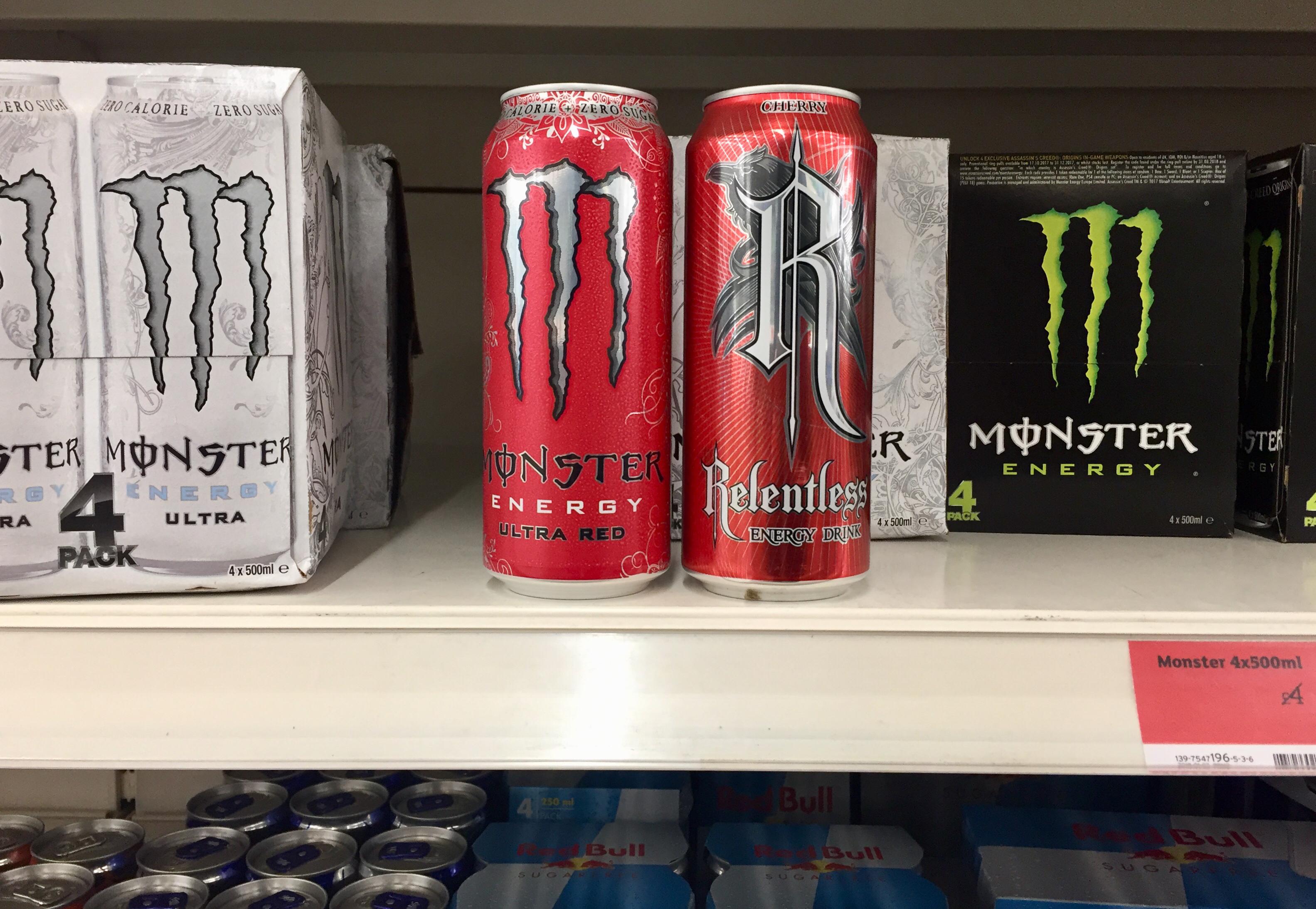
Lucozade offers a more mainstream and refreshing energy, whilst Monster and Relentless fight it out for the late night video gaming Goth market. Mountain Dew also targets this group so its glow‐in‐the‐dark bottle should come in handy.

In my hot 100 list of names for a cheap Red Bull substitute I’m not seeing ‘Emerge’ anywhere. Is it for lighting the barbecue?

Still plenty of room for new stories then, such as natural energy, and maybe something with a bit less testosterone?

Look & Feel

Posted 28 June 2011
LeatherWhisky

The famous orange ‘coat’ of Verve Cliquot champagne created both fantastic shelf impact and superb communication of brand values.

Now Whisky is having a go at the same trick, but what is the appropriate metaphor? For French consumers at least, the answer seems to be some kind of leather bag or pouch.

Unlike the Verve pack these have less standout than boxes or tubes, but this is a browsing category so we’ll let that pass.

Once I noticed them I was struck by a wave of imagination of secondary uses, but this soon gave way to the realisation that they wouldn’t hold binoculars or a hunting pistol, and I don’t possess either.

Good Wow factor. Now just give me a Why? factor and I’m sold.

Features and benefits soup

Posted 28 June 2011
Toothbrushes1

Give me one of these Colgate packs to hold, read and ogle the contents in a simply‐furnished room and I’d be happy for 15 minutes.

But ask me to choose one from the eyeboggling range on display at Tesco and my brain just can’t cope. They all look like minor miracles of engineering, but what’s the difference between them? What do all these colours mean? Are they for children?

Thankfully there didn’t seem to be any information about size or bristle firmness; or maybe there was and I missed it.

For anyone not determined to work it out because they ‘only wanted a toothbrush’, the simple Own Label designs are lying in wait…

Summer in a tub

Posted 28 June 2011
OasisSorbet

In-mould labelling transforms packaging: from a piece of plastic with a label on top to a seamless, integrated, single object.

The contrast is the same as that between a modern car and one with metal bumpers. How last century does that look?

On the shelf impact front the technique also enlarges the visible area. This might not gain much on these top faces, but adds a massive amount of visibility when the sides are the main selling face (eg for margarine).

On the downside, the technique makes recycling more difficult, and the plastic ends up in the coloured or ‘jazz’ stream.

My congratulations to the person who named that.

Shelf Life

20 May 2011
Brand Stories From Worldwide Supermarkets

Posted 27 June 2011

Welcome to Shelf Life Issue 9, devoted to the crazy, colourful, Looney‐Tuned world of packaging for kids.

Given that we’re in the supermarket it’s usually packaging for the mums and dads of kids, who have to decode and decide whether this brand or product is something that is suitable for my beloved offspring.

That’s where the fun really starts!

Frubes or Choobs?

Posted 20 May 2011
11

…or Suckerz or Squeez’mees, but whatever you do don’t call them yoghurt tubes or no self‐respecting kid will want to be seen with them in the playground.

For younger consumers (4‐6) any kind of cartoon looks kinda cool and kinda cute. Older kids and tweens require characters who are edgier, giving you a slightly menacing grin as you tear off the top of their heads and squeeze out their fruit‐flavoured insides.

Frubes (full title: Yoplait Petits Filous Frubes) have cleverly covered off both self‐made characters and licensed ones; with the latter you get two bites of the cherry, so to speak, when the film, and later the DVD, are released. Having eaten my way through the cast and crew of Shrek Forever After (all in Far Far Away Strawberry flavour), I couldn’t help wondering if I’d have enjoyed Shrek himself more in a nice green colour and swamp-flavoured. On the back of pack I also got a nice cut-out‐and‐keep door hanger with the message: Keep Out or Hear my Roar! ‐ which comes in handy at home.

So much entertainment in one small box; and I nearly forgot: some pretty healthy food.

Christmas is coming…

Posted 20 May 2011
2

… no it’s Easter, but almost like a second Christmas for the lucky recipients of these Easter eggs, which come with TV character-endorsed toys and games.

Packaging for kids’ food takes inspiration from the toy market, especially so when the same licensed characters are in play. The difference is that in food the packaging is usually smaller and always cost‐optimised, so this level of storytelling and fun is harder to achieve.

But not impossible.

More name games

Posted 20 May 2011
3

Persuading young boys to wash their hands when you need them to, let alone their hair, is quite a challenge. There’s no doubt that mums are grateful for the assistance of BEN 10, who has great hair thanks to ‘hero’ shampoo, and never forgets to ‘decontaminate’ his hands either (because you never know where those slimy aliens have been).

The extra level of engagement that comes from the product name is an important one, something the license holders for that ‘Super Soft Facecloth’ might do well to consider.

The face, arms and legs of chocolate cereals

Posted 20 May 2011
4

Kids’ appetite for chocolate flavoured cereals continues to grow, to the point where Coco Pops is now an umbrella brand offering several product types (based on the shape of the choccie-flavoured extrusion). Mums will be pleased that the newer forms also come with ‘Choc Fibre Fun!’, which is a fascinating prospect when you think about it.

The brand’s baseball‐capped mascot Coco smiles from the box at XXXL size, making him bigger than some of his customers. The logo is almost the smallest thing on the pack, but the branding is total.

Nestlé have clearly joined in the character size war too, whereas Weetos have opted for plan B, characterising the product itself.

This feels slightly older because nobbly brown shapes with arms and legs aren’t that cute. The design promises a lot of action in the bowl, and I’m especially pleased to see that green slime colour coding on the Alien invaders. Come on Shrek, get your act together!

Choices, choices…

Posted 20 May 2011
51

Two stories here: Firstly I loved this line up of Weetos, Krave and Weetabix Chocolate ‐ it was like watching chocolate cereals grow up in one metre of shelf space (even though they’re all happily eaten by 8 year‐olds).

The Kellogg’s sub‐brand known as Krave in the UK (and Trésor in most of the world) is targeted at ‘young adults’, but looking at the ads around the world it’s clear that younger consumers are also going to love this story. The product’s snacking potential (it’s like a tiny Nutella tortilla), hasn’t been lost on Kellogg’s ‐ Countline formats also exist.

But the relatively consistent marketing of today masks a fascinating back story of how exactly the same product is/was/could have been branded. Judging by these packs, collated by a US‐based Trésor fanatic, the target group and brand story is a very moveable feast.

I find this an illuminating example of the choices faced by Marketing and Innovation teams, and the power of packaging to articulate those choices. Not sure if ‘articulate’ is the right way to describe ‘Trésor Grrr’ however!

Play with your food

Posted 20 May 2011
6

We all know the rational argument: ‘A healthy intake of Calcium is important at all stages of life, but it’s especially good for kids. Eating a piece of cheese each day as a snack or meal is one of the easiest ways to get your recommended daily amount (RDA).’

But the RDA that interests kids is not Calcium but the one called ‘play’, and the ideal quantity is ‘no limit’.

Brilliantly marrying these two needs, the invention of a cheese stick that kids can play with is a true win‐win. But how to tell the story best?

Here are two excellent examples: Kraft’s dairylea is more Mum‐focused with its evocation of sunny meadows, but the suitably ‘mad’ cow provides just enough fun.

Cheesestrings goes further, defining the category with ‘say what you see’ characters and a unique colour code. Also important in my view is the remarkable economy of words on the front face. All good clean fun.

Party Animal

Posted 20 May 2011
7

First of all I should point out that Kidibul is a sparkling apple juice drink, and nothing to do with Red Bull or energy drinks. At least that’s what I understand from the manufacturer’s website.

So I have to admit that I simply can’t explain the tray in this image, which had me sensing a major exposé for a minute.

However the main packaging format of the champagne bottle (and promo‐bucket) strikes me as an example of bold and differentiating marketing.

Graphically the fun volume has been turned to MAX and is making my ears bleed, so I think a better balance with product values and benefits is needed. Where’s the contact page on that website?

The splattergun approach.

Posted 20 May 2011
8

So you’ve managed to persuade your kids to top up with Calcium and dietary fibre, now what else can you worry about? I know ‐ hydration!

We’ve long since had an army of low/no sugar soft drinks, but now kids have their own flavoured water brands too.

Mums have been drinking this stuff for years, though making water less boring by giving it a trace of flavour doesn’t seem to be quite as fashionable as it once was.

Whilst I don’t think these products can be as much fun to drink as the Tartrazine‐coloured fizzy pop I grew up with, at least the packaging adds some excitement.

Without a backwards‐facing baseball cap in sight, Fruit Shoot hydro manages to tell an all-action story of a rough and ready drink for your little tough guy. Girls, you take the panda with the yin‐yang tattoo…

Cool for cats

Posted 20 May 2011
9

Crusha is a milk‐shake syrup, so don’t drink it neat or you’ll look like the cat on the old pack (in the middle).

The new cat looks a lot more chic on her fully-sleeved new bottle design, but has the brand lost a bit of its edge? Can we see her fitting in as well to the quirky ads that got the brand noticed?

Quaker plays Catchphrase

Posted 20 May 2011
101

Following on from the success of ‘Oat so Simple’ (convenient porridge), Quaker has dipped into the same rich pool of wordplay to come up with ‘Paw Ridge’.

As soon as you say it, the inhabitants of this rural American backwater practically invent themselves. Now it’s up to the agency to keep enough stuff happenin’ with them there varmints to keep the kids interested. Pointing at the sign’s a start, but luckily there’s a lot more online.

Marketing isn’t meant to be this easy, but when it is, why try harder?

Shelf Life

11 April 2011
Brand Stories From Worldwide Supermarkets

Posted 11 April 2011

Welcome to Shelf Life Issue 8, where the metaphors are flying furiously, and the perils of trying too hard are all too evident.

The sweet spot always lies in connecting personality to a simple story and then we, the consumers, fill in the details to suit our worldview. Easier said than done, of course, but worth it when you get it right…

Metaphorically speaking

Posted 11 April 2011
PotNoodleGTi2

One of our mantras at OP is that you can judge a book by its cover, but this example reminds me of an equally powerful principle: you can judge a story by its title. (Well, the story’s intent, if not its quality, but let’s not split hairs).

In stories we all love a good metaphor, and I’ve lost count of the times we refer to a brand extension or innovation as its ‘turbo’ or ‘GTi’ version.

But sometimes, just sometimes, you find the perfect project to actually go ahead and use this metaphor in the name. Pot Noodle is a curiously British phenomenon, a successful brand of (snack) food whose brand story proudly boasts its lack of food credentials.

Seeing this GTi version, I suspect there were far more ‘black & chrome’ designs presented, and I think this is one brand where fans would happily buy it. People who like food, less so.

Personal branding

Posted 11 April 2011
Jamieherbs

Famous people are now widely considered to be brands, and by our definition that a brand is a story, no more, no less, that makes perfect sense.

Jamie Oliver (the person, or bloke as he’s more accurately known) is fast becoming a very big brand, with his fingers in numerous pies (metaphorically speaking – there I go again).

Capturing such a multi-faceted (and fast-changing) story is an interesting challenge, and in Jamie’s case the branded packs present a mixed message.

There’s the slick and conventional version called ‘Jamie Oliver – keep it simple’, which is nowhere better expressed than in these delightful home herb kits. Of the numerous ‘signature’ poses the designer could have chosen, this relaxed snacking on a bowl of pasta is well chosen, and given just enough presence without dominating. It also ranges extremely well, every pack format managing to find a bottom right slot.
But we also have the much-awarded J-me range, representing a more authentic collection, produced in collaboration with a ‘group of truly talented designers and artisans’. The food packaging is a triumph of imagination over conformity, and also suits Jamie very well, though perhaps more for the committed fan than the casual Sainsbury shopper.

When you’re this prolific, and this famous, seems you can have your cake and eat it (excuse my metaphor)…

Where is Cathedral City?

Posted 11 April 2011
JSCathedralCity

According to Wikipedia (how’s that for a divisive opening statement?), Cathedral City is made in a place that has no cathedral, and is not even a city.

Its rise and rise to become the dominant brand leader in the UK branded cheese market suggests that the story it tells is far more effective than the one it could have chosen (‘where this cheese comes from’).

This is not to say that ‘where this brand comes from’ is not a good story; the Dairy market is full of such stories, just ask any German what they think of Ireland’s Kerrygold; or ask a malt whisky fan which specific location on the tiny island of Islay produces the best whisky.

But in this case the ambiguity serves to allow Cathedral City to rise above regional clichés and dominate the landscape of the cheese fixture. Its rich red packaging gives no hint of rural pastures, and only a glimpse of the product (or more truthfully a square of cheese-coloured ink) through a suitably ecclesiastical window.

This story clearly has strong believers, and judging from the brand below here, some followers too.

Not getting emotional

Posted 11 April 2011
Keurigcupscloser1

New York, New York, so good they named it twice.

This New York supermarket also features some double branding, but in this case I doubt anyone will write a song about it.

The Keurig brand offers a selection of tea and coffee brands in a Nespresso-type cup format, for a popular in-home brewing machine.

On-shelf the packs have just undergone a redesign to place more emphasis on the brand/product experience and less on the cup format. But if like me you didn’t notice, I think we can conclude that 5% more emotion isn’t enough. Next time try 95%.

How much Special can you take?

Posted 11 April 2011
SpecialKclusters

When I was a kid Special K was famous for precisely ONE product, and to me its brand story was ‘nicer than Corn Flakes, but my mum says it’s too expensive’. In other words, an occasional treat.

I do remember the advertising on TV and on-pack for the ‘Special K breakfast’: with low fat milk and orange juice, 250 calories the lot. I never thought of it as a product for women on a diet, though my teenage daughter seems to have cottoned-on early to its true purpose.

In keeping with our collective obsession with choice, Special K is no longer a product, but a mega-brand with 2 metres of shelf space to contain all its flavours and formats.

Despite the extensive range the packaging remains single-mindedly brand-focused, meaning you’re going to have to look hard to find a favourite.

This new introduction gets some shelf impact from a fully metallic ‘New’ flash and a shaped box, but otherwise business as usual. If I watched TV I might know what’s Special about it, but the pack doesn’t give enough away after that first glitzy approach.

Oh look, that one’s got a free dress…

OJ wars

Posted 11 April 2011
innocentorange

Much excitement in the juice press (see what I did there..) about innocent by Coke’s new carafe packaging, which is genuinely appealing on the breakfast table. One-nil.

It promises to be recyclable too, so Pepsi’s Tropicana Tetrapak had better raise its game soon. Two-nil.

I don’t know whether innocent will phase out its Tetras or offer both formats, as it makes a power-play for this most mainstream of markets. But I’m glad to see it has phased out the leafy hat, which for me crossed a subliminal borderline between ‘cute’ and ‘stupid’.

Now it looks properly innocent again, and it’s truly amazing to contemplate how this name/symbol metaphor adds value to something as commoditized as Orange Juice.

The UK’s 65th biggest brand and growing at 12% says we ain’t seen nothing yet.

‘Healthier’ chips prove hard to find

Posted 11 April 2011
SunBites

So you’re browsing the shelf for a few bags of snacks for the weekend. Like most people you’ll get the family favourites first, then there’s room in the trolley for something new and different, something that stands out and attracts you. Maybe something a bit healthier…

Everything comes in bags of six, but what the heck, on promotion they’re all cheap as, er, chips.

What have we here then? Sun Bites. They look like Frazzles, but I’m getting a few healthy signals, especially on the new pack. The flavour name is now in colour, much tastier, and the naive illustration and typography makes them look quite natural and home-made-ish. The old pack seems to be promoting a golf weekend…

Suddenly a steaming baked potato image enters the corner of my eye. It’s called ‘Hello flavour’. Hello sailor to you too, cheeky!

On closer inspection (if I can be bothered, in this case I can because I’m writing a blog, but most consumers aren’t), this is also a product with a health message – low salt. This design might work on a bus-stop poster, but on a pack it’s just a big messy illustration that looks far from healthy.

The brand appears as a subtle endorsement at the bottom, so clearly Seabrook have decided to invest in establishing ‘Goodbye salt, Hello flavour’ as a sub-brand. It’s certainly different from ‘Soundbites’, but for me the flavour reassurance is so loud that I can’t hear the real message.

Guard rabbits

Posted 11 April 2011
Lindtbunnies

I thought Easter bunnies were really cute until I was faced with this rather forbidding display at the Co-op (Swiss version). That’s what I call an impressive off-shelf display (we’re talking every checkout!)

Still, rabbits are often deceptive in their apparent cuteness, as King Arthur found out all too well.

Happy Easter!

Shelf Life

16 March 2011
Brand Stories From Worldwide Supermarkets

Posted 16 March 2011

Welcome to Issue 7, liberally sprinkled with stories of honest, natural ingredients, how one word makes all the difference, mixing metaphors, and standing out by disappearing. Serve hot.

The human factor

Posted 16 March 2011
DanoneEleveurs1

Big brands are discovering ways to take on the ‘I made this in my shed this morning’ story of artisan production. In the UK brand leader Müller (from Germany) and new arrival Nom (from Austria) are both emphasising their Shropshire location, and here in France Danone is reminding its customers that milk comes from farmers, not factories.

The assumption behind this brand story is that the farmers operate human‐scale and humane farms, which is presumably perfectly true in France. In the UK the prospect of ‘super‐dairy’ farms arriving from the USA makes me wonder who will want to be associated with that story?

The farmer speaks

Posted 16 March 2011
Lafermiere1

‘La Fermière’ is a small scale producer (not a real farmer) from the Aubagne region close to Marseilles. That’s enough information for me to love these products already, but for the rather fussier French public the website waxes lyrical about the special ingredients and ‘unspoiled by progress’ production techniques.

The key brand equity that proves this story true is the real terracotta pot used for most products. But for me there’s a second level of evidence that seals the deal ‐ the multitude of shapes, colours and graphic design elements that ensure no ‘system’ is discernible. This level of disorganisation can be designed, but it’s much harder than making it logical. A redesign is in progress ‐ let’s hope they don’t tidy it up too much.

Disturbing the peace

Posted 16 March 2011
MicheletAugustin

Trays. 30mm of troublesome barrier to your pack getting the attention it deserves, or a great opportunity to get even more? Two ways to get attention here: write ‘Attention’ in big letters on the tray; and put a big friendly brand symbol on the inside, so the empty tray keeps working hard.

We could do a whole blog on the delightfully wacky Michel & Augustin brand, whose strapline ‘les troublions du goût’ promises that normal rules do not apply. Take a look at some of their recipes here.

An Englishman abroad

Posted 16 March 2011
TyrrellsExport

If English eccentricity works for Tyrrell’s in England, imagine how much easier a sell it is in Europe. These packs help by really bigging up the company’s vintage postcard collection.

Another ‘stuck in the past, and proud of it’ story, but it’s one that England does particularly well.

Which story do you see first?

Posted 16 March 2011
Duvet

Sad to admit it but I first noticed the typography, which I hereby award the ‘best use of drop shadow’ prize this month. Quite why those people are so intrigued by that feather I will leave to your imagination. The brand? That’s on the other side of the box, so I don’t expect they do ‘competitors’.

Hot and messy ‐ that’s cool

Posted 16 March 2011
PringlesXtreme

Whilst competitors like Doritos have been getting lots of attention doing really cool stuff like co‐creation of new flavours and even ads, Pringles continues to quietly march on, growing 11% last year to reach number 35 in the UK’s biggest brands chart. Flavour innovation was a big part of this success, including new ‘Xtreme’ flavours aimed at younger consumers with more adventurous tastes (‘exploding cheese and chilli’, anyone?)

The packs go for Xtreme standout and present a rather mixed message that looks to me like a chartered accountant on ecstasy. But maybe that’s actually cooler than the lovely designer outfit created here.

Balancing act

Posted 16 March 2011
DanishBlue

This clever little assymetric tray allows the triangular form that denotes a speciality cheese to stand up and stand out. The pack itself mimics a cheeseboard and could actually be used that way on the table. But without a (graphic) story to tell me more about this brand, only packaging geeks might even notice.

Did they forget to print it?

Posted 16 March 2011
WhiteTissues1

What does white code for on a pack? Purity? Elegance? Lightness? Naturalness? Economy? All of the above of course, depending on context.

Here in tissueland Kleenex has long understood that the brand should be prominent on the shelf (to remind consumers of quality), but be invisible in the home (so the pack can blend in with my tasteful decor). Once the rules are written the subtlety stakes can be raised, like this elegant, shaped, unprinted but embossed tissue box from Private Label. Maybe The White Company should get some in?

House

Posted 16 March 2011
JSHouseWine

Sainbury’s Private Label wines look resplendent in their matt black and gold labels, elegant typography, and a small but perfectly formed button to provide varietal coding. But the real story here is summed up in a single word: House. This transforms a good design into the special selection of an unseen sommelier.

“I bought the Sainsbury’s House wine” has a far better ring to it than “I got the own label, hope you don’t mind…”

Shelf Life

11 February 2011
Brand Stories From Worldwide Supermarkets

Posted 11 February 2011

Welcome to Shelf Life 6 and the first edition of the New Year. We’ve been a bit busy.

The Brand stories analysed include innocent, Hairy Bikers and the London Olympics, making this blog the only place where it’s possible to read those names in the same sentence.

Next time I’ll be focusing on a specific sector and identifying the best and worst storytelling on shelf. Suggestions welcome.

2012 ‐ the highs and lows

Posted 11 February 2011
london2012

The image on Wolff Olins’ website gives us a vibrant picture of what their controversial ‘London 2012’ branding can deliver, when the full might of the identity system comes into play.

I’m sure there’s an equally inspiring brand manual around, but someone forgot to give it to the people behind the posters, retail design and packaging now appearing. Or has it been secretly repositioned as the ‘austerity Olympics’?

Hairy Bikers. On a moped

Posted 11 February 2011
hairybiker

The UK has a seemingly insatiable appetite for both celebrity chefs and big packs of posh crisps, but I think this is the first time I’ve seen the two obsessions combined.

However I wonder if the consumer will see the connection at all, because the Hairy Biker ‘brand’ as seen on TV is a totally different story from that being told by the packs.

Resplendent as they are in their Marks & Spencer graphics and pastel shades, I’m just not getting the throaty roar of the Triumph Rocket Threes, as the lads speed off to their next culinary appointment.

Sch… you know why?

Posted 11 February 2011
schweppes

One of the things that helps a great brand story is a name so outrageously daft that they couldn’t have made it up. Well, apart from Haagen Dazs, but that’s one of the few brilliant exceptions.

Schweppes is so famous for fizzy grown‐up drinks that our client Shloer is often spelled ‘Schloer’ by consumers.

The current design balances that awkwardly long brand badge with a trail of effervescence, a theme that was cleverly built on in the pre‐christmas ads (weirdly still running at my local Sainsbury’s).

But shoe‐horned onto Abbey Well mineral water as a co-brand, the story of both is completely lost in favour of a blunt but soulless message: ‘we acquired this one’.

Boxing clever

Posted 11 February 2011
wineboxstories

A 3 litre wine box comes with certain assumptions built‐in, foremost amongst these being that it’s for group consumption. It’s also more convenient and cheaper than 4 bottles, but as the host or hostess of the party how do you make sure that your selection reflects your good taste or zest for life, and not just an eye for a bargain?

Of the wide variety of brand stories on show here, I’m liking Lindeman’s warm sunset over the vines, complete with swirling glass. The strapline ‘hold on to the moment’ builds this theme, but which came first, I wonder?

Wine boxes have certainly upped their game in terms of visual appeal, now it must be the turn of the fiddly plastic taps inside.

Window shopping

Posted 11 February 2011
windowshopping

The idea of letting your product show through a window in the packaging is a great temptation to producers and designers alike, provided it doesn’t affect shelf life and that the product ‘looks the part’.

Stories that work with windows are usually about product pride or authenticity, but there’s always the risk of accidentally shouting ‘commodity’.

Neither Natco nor Cigala can be accused of that, but the latter’s ‘crayfish garnish’ turns out to be a one‐trick pony, the only product in a large range that looks the same when cooked.

On the other hand Natco’s ‘authentic Indian cooking’ story frames its pulses so perfectly that it’s a shock when the product moves.

But unless a brand has a unique, robust and great‐looking product (in the raw), the window can only ever be a nice detail within a bigger story; not much evidence of that here.

Clash of the friendly monsters

Posted 11 February 2011
clash

I’m quietly impressed with innocent’s continual fine‐tuning of its brand story to attract new consumers, including the holy grail of kids and their lunchboxes.

Their wide‐eyed saintly blob is joined by the obligatory gang of fruity characters, whose online activities and choice of freebies strike a good balance between healthy fun and (buzzword approaching) edutainment.

The packaging also obeys the new design orthodoxy of kids products (less ink = fewer additives), whilst keeping the fun stakes high.

Meanwhile over at Pepsico’s planet lunch, the smart idea of combining nutritionally better-for‐ them drinks and snacks also tweaked its packaging: The monsters get a high‐gloss 3D look, and the pack inside reveals itself on the box ‐ in case you didn’t know what squeezable fruit looks like.

Despite the extra‐terrestrial online playground, I’m not sure if kids or mums are warming to this one‐stop shop concept. Still on test market in Sainsbury’s, at least they’re learning by doing.

It’s a wrap

Posted 11 February 2011
waters

I’ve just finished writing an article for Water Innovation magazine (page 43 if you’re interested), examining the different stories being told by water brands.

Naturally my focus is on their packaging, but after analysing lots of really interesting bottle designs, my attention turned to the fact that the main design feature on the supermarket shelf is a large area of stretched and distorted shrink film.

Despite its challenges this secondary packaging provides a great deal of space for brand storytelling, including sub‐branding and strategic promotions.

As the stories become more complex than ‘our mountain source’, embracing ethical and environmental dilemmas, the pressure to use this space effectively will only grow.

New York New Pack

Posted 11 February 2011
newyork

In my opinion these are the best (pre-packaged) bagels you can get in the UK, so I’m speaking here as a consumer first and design pundit (some might say guru…) second.

There’s no doubt that the redesign (the one on shelf) is technically ‘better’, with clearer product coding, neater typography and even a shinier plastic bag.

But in storytelling terms I’m missing a bit of the authentic “Hey, mister, blow it out your ass!” feeling I used to get from the old pack.

Go on, tell me New York Bakery Co. is in Hemel Hempstead and really make my day…

Shelf Life

3 December 2010
Brand Stories From Worldwide Supermarkets

Posted 03 December 2010

Welcome to Shelf Life issue 5, an eclectic mix of on-shelf brand stories from 3 countries, but mostly the good ‘ol U of K.

We’ve got household names (an interesting expression in itself) such as The Stig, Gaffer, Jan, Pret, Felix and a Bulldog. So what can their packaging tell us about them that we don’t already know…?

Branding in the fast lane

Posted 03 December 2010
1

Despite being a ‘public service’ (as opposed to ‘commercial’) broadcaster, the BBC puts many big-spending corporations to shame when it comes to brand creation.

Quite apart from its expertly managed own brand, and innovative sub-brands like BBC i-player, it has also created global programme brands, tapping into universal human needs for connection, empowerment and…. driving very fast.

The Top Gear brand already had strong values and raving fans, built up over years of exposure to the non-PC views of its iconic presenter Jeremy Clarkson. But with ‘The Stig’ they have enriched the story immensely, introducing a masked silent hero with special powers.

Top Gear also celebrates other aspects of good old-fashioned blokey pursuits, hence these novelty Stig toiletries (including Soap-on-a-Rope!) will surely sell out. For me the product names in Dymo-tape panels is a touch of retro-design genius.

Going with the flow

Posted 03 December 2010
2

Tetley made quite a splash a few months ago with the news that the Tetley Tea Folk, the advertising icons that made the brand famous, were back after nearly 10 years in the cupboard.

Around the same time new pack designs were introduced across an increasingly diverse range of products, including green tea and redbush (Tea Folk can’t be doing with ‘rooibos’).

So what’s the packaging story being told here? Try as I might I can’t seem to get further than ‘dancing leaves’, attractive but generic. In a market built and sustained by heavy advertising spends, maybe the pack doesn’t have to do more? Watch the great launch ad and tell me what you think.

Christmas is coming

Posted 03 December 2010
3

We’re all used to tinsel-infested TV ads starting in October, but in supermarketland the onset of the festive season provides no finer a visual feast than this aisle full of choccie assortments.

It’s a minor miracle of global buying power that Mars, Cadbury’s and Nestlé can let Asda give these away at a fiver each.

But with pricing identical, plenty of shelf space, and presumably most of the marketing budget going to ITV in the 6 weeks before Christmas, who gets the sweet-toothed consumer vote?

Watch this space (unless they find my webcam…)

McPassion fact – or fiction?

Posted 03 December 2010
4

I’m hoping that I can prove my wife’s assertion – that McDonalds owns Pret à Manger – to be plain wrong.

Even if she’s right, it’s still plain wrong, because the two brand stories couldn’t be more diametrically opposed.

I’m not one of those with a knee-jerk detestation of McDonalds and all that it does. In fact I’m a fan of the new story being created by their re-designed stores and menus. But it remains the most massive of mass-market brands, with the inevitable compromises that brings.

Pret on the other hand offers us a hundred perfectly-penned ‘passion facts’, which explain exactly how it isn’t like McDonalds or any other ‘fast-food chain’.

So there you have it, she’s wrong, and I can go back to my falafel and hummus sandwich that was made here, in this shop, today – “no sell-by date, no nightlife”.

I love this story, I don’t wanna hear your McFiction.

Jan, Jan the pancake man

Posted 03 December 2010
5

In the Dutch market this must be the UK equivalent of a steak and kidney pie called John. Or a TV channel called Dave.

With its brand story firmly rooted in the well-trodden path pioneered by innocent and Michel et Augustin to name but two, Jan has nonetheless managed a new twist.

To me it’s the kids scribbling on the tablecloth (or the paper provided) whilst waiting for your order at de Pannenkoekenhoeve. A great story to lessen the guilt of buying a product as ultra-convenient as this. Whatever next, microwaveable sausages called Frank?

Smells like teen spirit

Posted 03 December 2010
6

Surfing through an internet chatroom on computer games that had been ‘seeded’ by some flunky asking for opinions on a new Axe fragrance, I was touched by one respondent who proudly declared his preference for Slazenger deodorant: “This is what the Pros smell like.”

Here in Southern Europe (and it doesn’t come much more southern than Cyprus) men clearly respond equally well to scents endorsed by Sports brands, though I wonder if this store will ever shift those cans of adidas ‘Fair Play’ 2008.

The more up-to-date variants are also rather uninspiring both in design and naming – ‘Dynamic Pulse’, ‘Team Force’, ‘Deep Energy’, ‘Fresh Impact’ and ‘Ice Dive’ promised little and looked like even less.

Avoiding the homophobic sounding local brand STR8, I’ve gone for Nivea Menergy, in ‘Rebellious’ fragrance and with a cap that shouts: ‘YOU ROCK’. Sold.

Moisturising Men

Posted 03 December 2010
7

The early pioneers of this category were the fabulously named Metrosexuals, a small band of males with enough self-confidence to happily embrace cosmetics.

Mainstream acceptance has been some time coming, but the magic formula as always turns out to be a credible brand story. So now moisturising man can look himself in the eye in front of the shaving mirror and declare: “Sure, I take care of my skin, but I’m still a BULL DOG with a ROCK FACE!” Not much evidence of a feminine side there then…

Power of packaging

Posted 03 December 2010
8

I like this simple example of the power of packaging structure, because I distinctly remember staring at these for minutes on end, to triple-check that they were actually the same product.

The possibility of parting with north of seven quid for that cheap Own Label copy of proper lubricant on the right makes me shiver.

But £7.48 for the specialist ‘Pro’ product on the left, no problem. Stick a half-decent label on it and you could make it £7.99. Kerching!

Seasonal stock

Posted 03 December 2010
9

An interesting contrast between the fate of these packaging-led promotions.

You can’t give me these Halloween products 2 weeks after the event (even though they’ll probably be still ‘in date’ for next year).

On the other hand Coke’s BBQ pack has me thinking I’d quite fancy one, despite the fact that it’s freezing outside. Appetite appeal in one colour printing, that’s good design.

Cat tales

Posted 03 December 2010
10

In 1991 I wrote some copy for the first Design Bridge brochure, including an account of our recent highly successful redesign of Felix cat food. ‘The faithful companion, the athletic adventurer, the Vogue model; take a look at the cat food shelves and they’re all there’.

They’re all still there, and it’s good to see that what was then (incredibly) a new story of ‘cheeky scamp’ is still serving Felix well, even though the pack execution seems to get less and less cheeky as it evolves.

Stablemate Go-Cat wisely opts for a completely different brand story, with a heroic ginger Tom bounding out of the pack to claim his just reward for a hard day’s pest control. And now with 10% less cardboard, what’s not to like?!

Shelf Life

18 November 2010
Brand Stories From Worldwide Supermarkets

Posted 18 November 2010

Welcome to Shelf Life issue 4, which this time reports from Marrakech. I’d guess that local markets and groceries still account for a significant share of consumer food spending, and of course that’s where the truly local flavours are to be found. Supermarkets are dominated by French chains, and so combine the exotic with the strangely familiar…

Think inside the crate

Posted 18 November 2010
1-2

When buying a delicious fresh juice from a market stall is such a feast for the senses, it’s pretty hard for a Tetrapak to compete.

Of course it totally wins the convenience contest, but just think what we in Northern Europe could make of a brand with a story called Marrakech or Agadir!

Of course they’re not as exotic to locals, but they could try a bit harder than this. The best bit of branding here is the tiny ‘Maroc’ black diamond on the oranges.

All the tea in China

Posted 18 November 2010
2

Delightful cube-shaped packs of leaf tea dominate this particular shelf, with green tea nearly as prominent as black.

The shape echoes the traditional tea chest of course, but the graphical brand stories are a surprising combination of Chinese (origin), Arabic (culture) and French (quality? allure? you tell me) signals.

Pick ‘n’ Mix

Posted 18 November 2010
3

An interesting blend of great-looking (and smelling) produce with completely soulless displays.

Shopping for olives and spices at the Souk is a far more rewarding experience, but it does come with authentic flies as well.

Character, anyone?

Posted 18 November 2010
4

It’s not difficult to get an illustrator to draw a cool looking character. It’s not that difficult to make an animated film or ad with your character, probably in 3D by next week. It’s another thing to make me (= your consumer) care, though you might get away with it for a while if I’m under 6 years old.

It sounds obvious but a character can only exist in the context of his or her story, so “Hi Kids, it’s me!” doesn’t really count.

“Welcome to my fun, jungle world!” does count, and it seems Kellogg’s sells enough Chocolate flavoured cereal to justify a design per country, or at least per region. This version seems to work better (at storytelling, and coding) than many I’ve seen in Europe.

Good to see masked dude again too, though only French TV watchers can tell me if I should care. Eventually someone will tell me what the ‘Z’ stands for…

In the bag

Posted 18 November 2010
5

Adding value to milk is a full-time job for some of our clients, so it’s always worth looking for fresh inspiration.

Nothing much here apart from the usual cows, grass, sky and sunshine (though they’re still hanging on to pottery churns and jugs, which Europe tends to reserve for yoghurt stories). I’m almost sure that the ‘face’ is a visual pun in Arabic (surely it can’t say ‘milk’?)

Your image in their hands

Posted 18 November 2010
6

A substantial beer, wines and spirits section boasted its own security guard, but then again so does my local Morrison’s.

The old ‘brand jigsaw’ trick worked a treat for J&B here, whereas Ballantine’s ‘leave an impression’ message was mixed in more ways than one.

Meanwhile the Absolut ‘Glimmer’ off-shelf display looked a bit off-brand to me, at the level of labelling (travesty!), bottle (less than smooth), box (isn’t it all about the bottle?) and merchandising (perhaps the security guard does it in his break).

Classy Italian

Posted 18 November 2010
7

It’s not often a biscuit pack is lavished with embossing, foil and a window, but we’re talking ‘Gran Pasticceria’ here (did I say ‘biscuit’? My apologies).

You can touch and taste the quality and craftsmanship of the product by simply standing in front of the box. Beautifully old-fashioned.

The female form

Posted 18 November 2010
8

Morocco feels like a fairly emancipated Muslim country, but brand stories that want to communicate an ‘ideal’ figure still need to tread carefully.

A quick comparison with the same pack from Cyprus shows that the rest of the global design system (including the wholegrain message and promotional window) is admirably consistent.

Decoration is craft

Posted 18 November 2010
9

This big display of apricot jams reminded me of the lost art of lid design, which was also in evidence on mayonnaise, pasta sauces and numerous other categories.

Yes the world-famous Bonne Maman gingham lid was here too, but I was charmed by these local patterns. The story (‘pre-industrialisation’) is the same, and it makes jam and many other things taste a lot nicer.

The job of the label is to support, and then nuance this story, but most jams and spreads don’t bother; a missed opportunity.

How do you like your science?

Posted 18 November 2010
10

The battle for laundry supremacy between Unilever and P&G is a familiar sight on supermarket shelves across the world.

The latter certainly has the edge on harmonisation when it comes to naming, though Ariel’s molecular orbital derived symbol comes in several forms around the globe, suggesting different stories still need to be told. The appeal and relevance of the OMO/Persil/Brand C story (‘dirt is good’) is universal, so the pack design gets the chance to play a more creative game.

But what I really want to know (from any Arabic readers) is: what claim is Tide making here??

Shelf Life

1 November 2010
Brand Stories From Worldwide Supermarkets

Posted 01 November 2010

Welcome to Shelf Life ‘Edition Française’, in which all the posts are inspired by a recent tour de France.

In the world at large the French language is often used to lend products and brands an air of romance, good taste, or a certain ‘je ne sais quoi’. But in French supermarkets the language, both verbal and visual, can be more foreign than that…

Nutella and Friend

Posted 01 November 2010
Nutellafriend

Flattery doesn’t get much more sincere than this, to coin a phrase.

Here in France the battle between Private Label and major brands is a fascinating one, played out at several levels.

The Ivoria brand is one of many which have been created by supermarket chain Intermarché, whose ‘selection Mousquetaire’ endorsement is carefully placed to be last reading. (On the Intermarché website each ‘brand’ details its history, values and even in one case its logo evolution, so this is no superficial undertaking).

What gives the game away at this point is the brand’s behaviour: despite its rich past and keenly felt values, it can’t think of anything it would like to do more than impersonate the brand leader in every category.

The imitation extends beyond graphic design and layout to the jar shape, so suddenly that black ‘n’ of nutella becomes pretty important.

Nesquik and Friends

Posted 01 November 2010
NesquikFriends

No problem spotting the kids‘ chocolate drink section, with no fewer than 3 brands in bright yellow tubs, including our old friend Ivoria.

This battle gets fought on size impression, taste appeal and health benefits, but mostly on entertainment value.

I think the gopher and masked dude of ‘Tonic’ are giving the rabbit a run for his money here, but I’m not aware of the market share data of course.

I did once spot a woman with two young boys, shopping the same fixture in Asda, announce to them: “Oh, look, Asda makes one too” (pointing out a Nesquik copy). It was about half the price, the kids said nothing, and she bought the Nesquik. That’s brand story power.

What’s in a name?

Posted 01 November 2010
Dkalco

One of the duties that comes with the turf of brand ownership is giving your products a brand name.

Intermarché’s dairy brand Paturages (the one with a logo history) doesn’t quite have the resources of IKEA when it comes to naming dozens of sub‐brands, so ‘Drinky’ will have to do. As for Dkalco, I wonder if it should be in the bleach section?

Back on the Drinky pack, haven’t we seen that masked dude before somewhere? He or she must be a cross‐brand character from ‘Selection Mousquetaires’… are you keeping up?

Running out of dictionary

Posted 01 November 2010
Briefingbiscuit

Having exhausted the supply of names that sound a bit like the product or its benefits, the French market turns to its agencies for suggestions. Er, ‘Briefing’, ‘Pitch’, ‘Social Media’?

Joie de Vivre

Posted 01 November 2010
Capsules

The world of wine embraces diversity and champions the small(er) producer over global megabrands. This isn’t as true as it once was, even in France, but there’s still a fantastic selection of local wines in every supermarket.

This one from Daniel Bessière stood out despite a fairly forgettable front label, thanks to the simple mechanic of a repeat pattern on the capsule (maybe the 500 bottle display stand helped a bit).

Closer inspection was rewarded by discovery of a fantastic little brand character, the perfect cliché to wave the flag for French viticulture.

Who says the French can’t laugh at themselves?

Fine French Food

Posted 01 November 2010
Mailleold_new1

A long history and extreme seriousness about food are both well represented in this brand story from Unilever’s Maille.

The new pack on the right drops the lighthearted tone of its predecessor in favour of bigging up the brand and better coding. Tasty.

In the shop window

Posted 01 November 2010
Vahinecakemix

Beautifully printed pouches with matt and high gloss varnishes make these cake mixes great to look at, a delight to hold, and easy to use.

The blue and white awning device gives Patisserie Vahiné a real sense of place, and quality. Délicieux!

Shelf standout? Yes it does.

Posted 01 November 2010
ExtraShelfImpact

I hadn’t seen this neat little trick before ‐ creating a small ‘stage’ by extending the shelf outwards, for a new brand introduction.

No doubt the extra real estate costs money, but not as much as the full gondola end.

Eye‐Catching POS

Posted 01 November 2010
Niveaheads

These Nivea shampoo packs are trying to look appealing with some trendy ‘word cloud’ graphics, but the rather staid pack form and design system imposes limits on that ambition.

Step forward the Nivea girls’ heads, so to speak, with great‐looking hair in any colour framing each row of product. Not much synergy with the pack, but certainly an attention‐grabbing headline.

Veuve’s verve

Posted 01 November 2010
Veuvepinkorange1

‘Veuve Clicquot Fridge is a state of mind. An attitude. Irreverent. It speaks for itself. Defying both allure and function. Somewhere between vintage and avant‐garde. A fellow traveller as well as a design accessory.

Marrying sophistication and elegance with technology and know how, it accompanies each moment of pleasure and every flight of fancy. Let’s play….’

Well that’s what they say. I think it looks a bit cheap, but then again the yellow jacket was always going to be a hard act to follow. Maybe rethink that pink one as well…?

A bientôt!

Shelf Life

18 October 2010
Brand Stories From Worldwide Supermarkets

Posted 18 October 2010

Welcome to the second issue of Shelf Life, the blog that decodes the brand stories being told by packaging designs on shelf.

It’s always good to catch a brand in the midst of change, when the old and new designs sit side by side in the supermarket. In this issue 4 out of the 8 posts involve brands in the process of putting their new clothes on, and it’s our job to ask: “Do they fit?”

Of course it’s only our opinion, and we’d like nothing more than to start a debate on any of these posts.

Drop the valley

Posted 19 October 2010
YeoDrop3

Yeo Valley’s new design raises some interesting questions about brand symbolism. Unlike Nature Valley or that tended by the Jolly Green Giant, Yeo Valley really does exist, and is very much part of the true story behind the UK’s biggest organic dairy brand.

The problem is that valleys don’t make very powerful brand symbols (being neither unique nor simple), and prove hard to manage when most of your packaging is round.

The new drop may not be the most ownable of symbols, but on shelf it does provide a strong focus for the pure and simple message of the brand.

Consumer need? Anyone?

Posted 19 October 2010
YagGoIcons-copy

Whilst a drop might be a reasonably good brand shape, it tends to struggle when pressed into service as a brand character.

French brand Elle & Vire is better known for its culinary sauces, but this mysterious product seems to be aimed at kids, probably very young ones judging by the lack of any personality in this blob (of milk? yoghurt? yag, perhaps?)

My heart goes out to the designer given the task of creating separate blobby icons for ‘Vitamins’ (coloured balls), Proteins, (eh, surfboard), Calcium (phew, easy: a bone), and Iron (I give up, how about he just gives a thumbs up!)

Only one way to solve the mystery: I drank some. To me it’s watered‐down custard, a conclusion supported by the ingredient list. Marketing’s greatest moment it isn’t!

Wagamama

Posted 19 October 2010
wagamama

When restaurant or celebrity Chef brands start competing in the supermarket, it casts an interesting shadow over the provenance of the other brands. Food from a factory, anyone? Or would Madam prefer something from our kitchen?

Interestingly this problem doesn’t apply to brands that are seen in restaurants, so Kikkoman looks even more authentic in this company.

Go with the flow

Posted 19 October 2010
Carex2

Handwash expert Carex dominates this sector with a simple proposition backed up by its equally simple name: Care, but with an x on the end (so you know it also works to clean and disinfect).

The new design makes an apparently small step to great effect: a dynamic wave crashes across the logo, and also interacts with the now fully transparent bottle to give a pleasing promise of ‘hand refreshment’. Job done.

Pigoenhole me

Posted 19 October 2010
sa_vo_ra2

We’ve all had a go at the ‘ye olde spice rack’ concept at some point, but what makes this design a very satisfying example is that the brand name and recipe description join in the game and so make the story feel integral, not mere decoration.

The endorsing brand (Amora) occupies a square at the bottom and round the side, for which rule‐breaking I salute the brand team.

Less is more. Unless it’s less

Posted 19 October 2010
Princes2

The ham may be cured, but we think this new packaging could make the brand rather ill.

It’s all very well for Waitrose or a premium niche brand to reduce its logo to a scarcely visible endorsement, whilst the product values are given centre stage. It’s our old friend the ‘less is more’ story, appealing to the discerning aesthete in all of us.

But Princes? Come off it, it’s a treasured ‘trading’ brand, labeling commodity products with a familiar old‐fashioned marque of good, though not premium quality. Apart from this design telling the wrong story, it’s also a poor execution: with the stately old logo reduced to a straggly wisp in the corner, and its riband a pointless underline, it truly is ‘lost in space’.

Nuts in Combats

Posted 18 October 2010
AlphaBeta

Good to see that some of the economy brands that are springing up all over recession‐hit Europe are using good design to say something other than the usual: ‘we know how to make you feel really cheap’.

Distressed stencil type on colour‐coded transparent labels give these nuts an attractive story of ‘natural basics’, making the price not the only focus.

Strangely the brand doesn’t feel brave enough to join in and lay some claim to this story. Perhaps as ‘AB Company’ it could also wear combats?

No need to read

Posted 18 October 2010
MountainDew

With a name like Mountain Dew the brand story could be all about high altitude refreshment, the Evian of sodas perhaps. But in one of the few good examples of ignoring the brand name and still creating a strong story, this brand had (right hand pack) a delightfully mad logo that promises high octane youthful kicks.

The new design on the left goes one step further (is it texting me?) but I’m not convinced that it really gains any more crdblty.

Shelf Life

4 October 2010
Brand Stories From Worldwide Supermarkets

Posted 04 October 2010

Welcome to Issue 1 of Shelf Life, the blog which reports brand stories from the front line – on the supermarket shelf.

No photoshop-enhanced beauty shots, just brands fighting to get our attention in the crowded, loud and sometimes untidy places we go shopping.

Recession design

Posted 04 October 2010
image-1

Sad to see it’s time to say goodbye to the delightfully wacky Ragu jar made from stacked tomatoes. It’s done some sterling work, but with the premium end of pasta sauces overrun with celebrity chef recipes, the brand has clearly decided to go all basic and value for money, taking the prize for the biggest increase in logo size at the same time.

Could it be co-incidence that over in The Netherlands, fellow Unilever brand Calvé has also undergone the ‘basic’ treatment. Despite the timeless authority of the wonderful badge, the throwing together of an ugly collection of rag-tag typefaces and shapes below it does nothing for the desired brand story of ‘why risk Calvé quality for a few cents less?’

Chilled out

Posted 04 October 2010
Grolsch2

Not a new design but fast becoming a classic (cue: less good design comes out next week).

The glass image looks so real I can hear it clinking. With the split design and clean white field it oozes freshness and quality, all held together with a distinctive badge shape and logo.

The clever bit is that it works just as well on the bottom shelf of the supermarket as it does at eye-level. Cheers!

Streetwisdom re-discovered

Posted 04 October 2010
Tangostreetwider

When Tango first found its story in the early 90′s, it was a cause for celebration because suddenly there was actually something to say about a non-Cola carbonate. Coke vs Pepsi is one of the archetypal battles between the establishment and the challenger, but until Tango re-invented itself orange carbonates only really had Fanta, with its rather apologetic packaging that suggested it had once met an orange but had not actually engaged with it.

When new advertising and packaging showed us what it was like to be ‘tangoed’ we got the message, and flocked to the new coolest drink on the (tower) block.

After the hype faded Tango compromised its design language and limped along for years in the shadows of its rejuvenated American rival, but this latest design restores its grungy teen appeal. Spotting this half-full can on the pavement I laughed out loud at the irony of the perfect ‘product placement’.

Keeping the mystery alive

Posted 04 October 2010
Twekkelo

Spending a lot of time in both UK and Dutch supermarkets, it was great to see the highly effective yoghurt bucket of ‘de Zuivelhoeve’ in Waitrose last year. The name translates roughly as ‘the dairy farmstead’ but to all intents and purposes it’s unpronounceable to Brits.

Clearly the bucket needed a bit of help from the graphic side to complete the story in export markets. So we’ve now got legible typography, some big clear fruit drawings, and a new brand name: ‘Twekkelo’. Glad they cleared that one up then.

(If you really want to know, it’s named after a rural region in the far east of The Netherlands).

Off the boil

Posted 04 October 2010
Ostricheggs

Whilst I can’t even begin to imagine the target group for marketers of Ostrich eggs, I can say with confidence that they deserve a better story than either of these.

Choose from: “we couldn’t be bothered to package it” or “purveyors of ostrich eggs to a minor Royal”. Come on, show me that weird bird, or tell me how BIG it is, or how the hell to open it!!!

Category Captain

Posted 04 October 2010
AHpotjesnewwide

Thanks to Wouter for giving me the headline, referring to the responsibility of brand leaders to help their customers sell more stuff, including Private Label.

Consumer insight, leading to accurate segmentation and innovation (in both product and packaging) is the key; so when the most interesting stuff on shelf is from Private Label (like these great little Spice ‘potjes’ from Albert Heijn), it’s often a sign that the Captain is ‘missing in inaction’.

James Boag’s

Posted 04 October 2010
JamesBoags

James Who’s? Ah, but that’s the fun of it, now we have to work out which is old and which is new. Assuming that designs tend to get better (not always true as we shall see), then for me it’s the one which helps me to tell myself the best story about why I should buy it. Is it me or am I getting a bit of a ‘Twilight’ groove here? Sold!

Showers of the world

Posted 04 October 2010
Palmolive

You’ve tasted the soups, drunk the coffees (and the teas), and now you can wake up in Marrakech and go to bed later the same day in Madagascar. The lure of exotic scents and tastes is a tried and trusted product story that will always endure, even when its design rarely gets beyond the postcard cliché. But what of the brand story here? Palmolive is a familiar and trusted brand and one half of a giant corporation’s name. I can’t help thinking it could be so much more.